Winter insurance
A layer of sugar just in case.
Limeflower honey
Thank you bees.
Slovenia
Beekeeping is one of Slovenia’s national obsessions, along with blueberries, buckwheat, and motifs of chickens.
Piping
A new queen piping: the sound of spring
Ready, Steady...
The flowering current is flowering, springtime is a-springing, and the bees are bringing home basketloads of pollen. Which means it’s time to set up the bait hive. I have a new location for it this year:
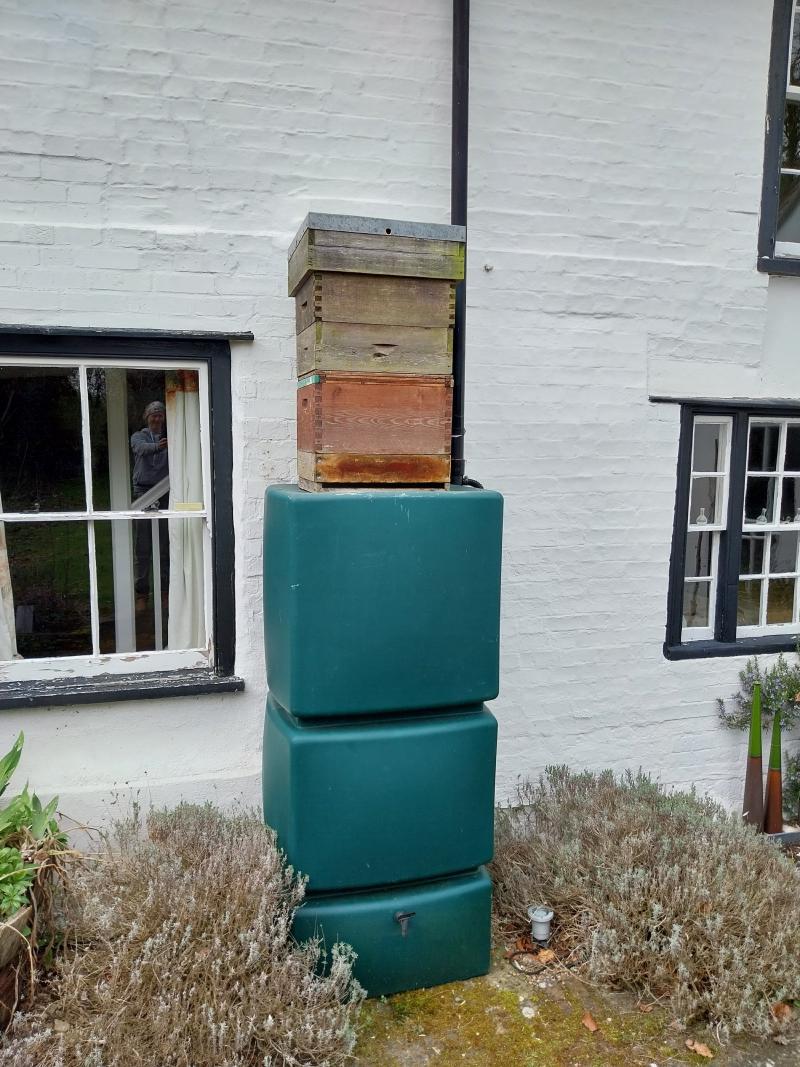
It’s on top of a water butt that stands against the south(ish)-facing back wall of our house. This sunny, elevated position should make it attractive to swarms.
The hive volume is smaller than it looks - only the brood box is accessible from the entrance. There’s a solid crownboard on the brood box, then supers above, then the roof. This is my one Smith hive, and its boxes are slightly narrower than those of all my other hives (Nationals), so I generally keep it all stacked together.
Death in Midwinter
We have lost a colony. Our dear Queen Elizabeth and her bees. I noticed that they were not flying, unlike bees from the other hives, who were coming and going in the mild winter sunshine.
Their hive entrance had become restricted in size, as the cork jacket had slipped down, leaving only a small gap for bees to enter and leave. It’s possible that they were trapped inside, but I don’t think so - and actually they might have survived if they had been fully trapped. What I think happened is that bees were able to leave, and did fly out, but on returning they went into the wider and more visible door of the immediately adjacent hive of Queen Hope, rather than back into their own doorway, which was also overshadowed by a flowering branch of shrub honeysuckle. As the number of bees within Queen Elizabeth’s hive then became depleted over time, the colony shrank beyond the minimum viable size to retain warmth. They may then have perished on one of the very cold nights we had in mid-January. But this is only conjecture.
Elderberry Cyser Vinegar
Delicious red vinegar made from honey, apples and elderberries.
Christmas Eve
A remarkably warm day and bees flying everywhere!
Calibrating calibrating 123
In praise of extra virgin olive oilQueen Maureen
Our newest queen.
Queen Jane
Introducing our first new queen of 2024.
Rubber band beekeeping
My beekeeping involves raiding the kitchen drawer surprisingly often.
Swarm alert!
10th April, and they’ve already swarmed
Hope Springs Eternal
The queen is dead. Long live the queen!
The Almond Blossom Appreciation Society
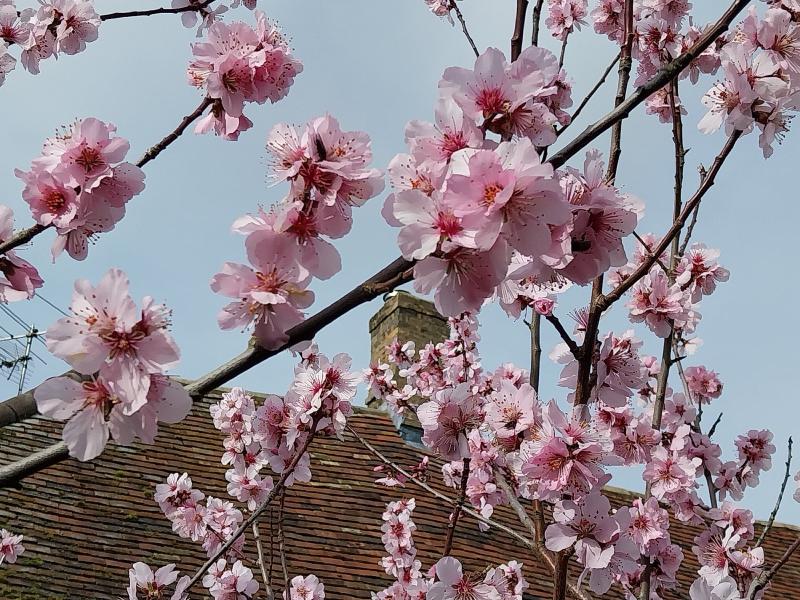
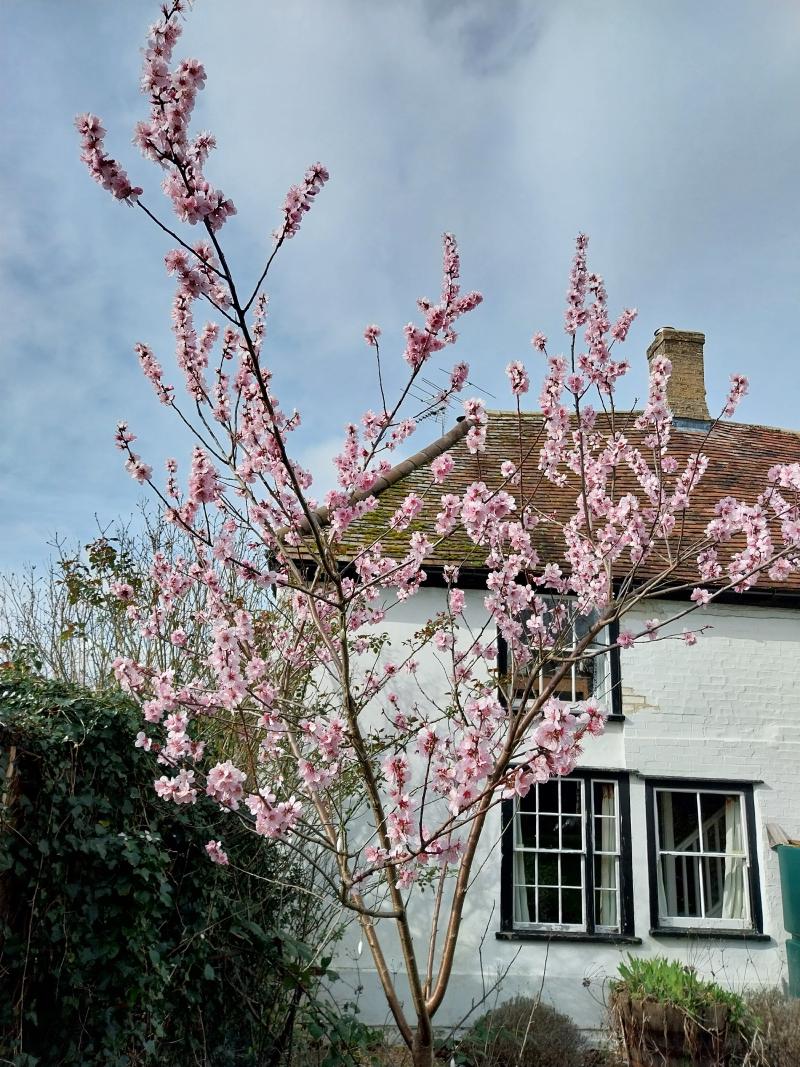
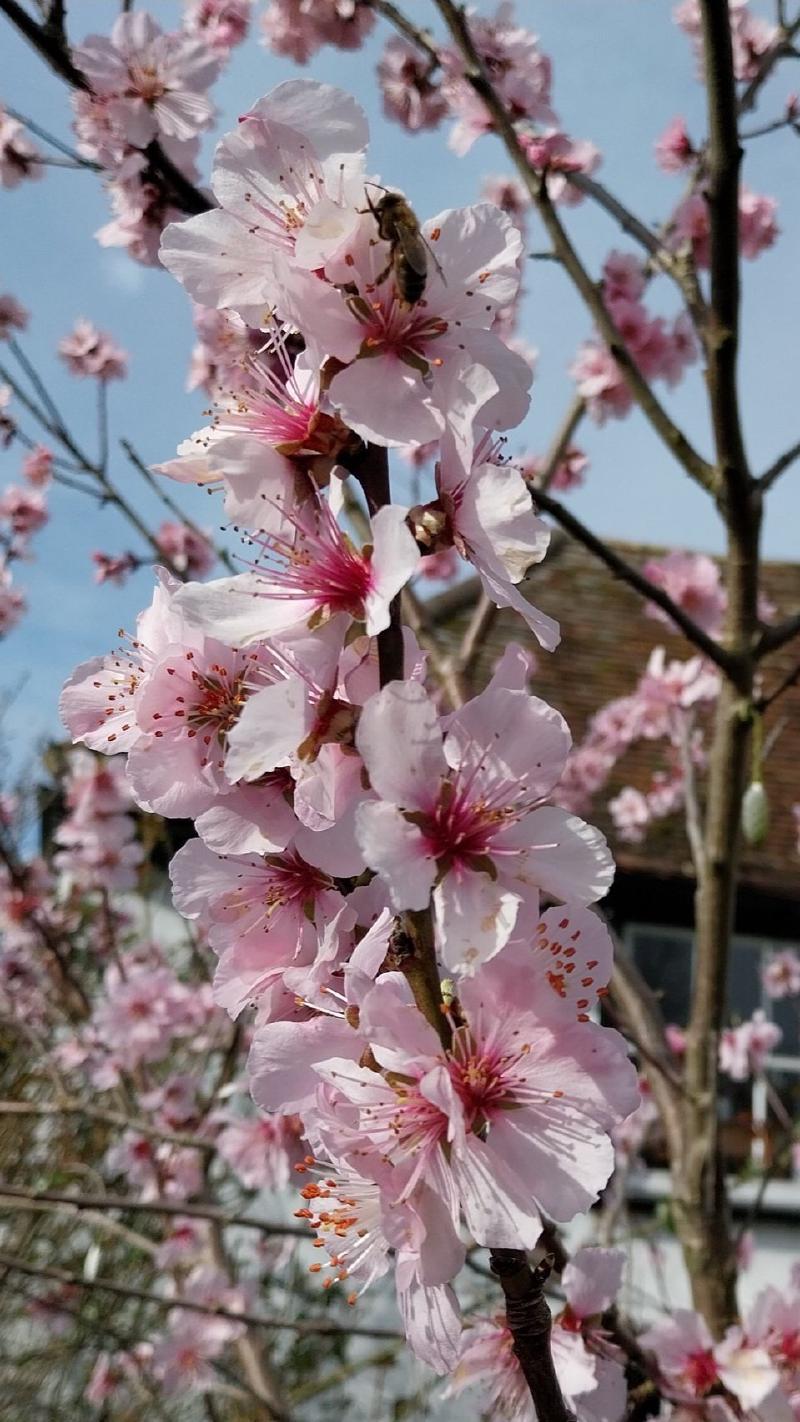
I planted this tree when we moved here so it must be about six years old now. It grows almonds, but I grow it for the blossom rather than the nuts. I planted an almond tree at our previous apiary too, which was also welcomed by the bees in early spring.
Honey Bees by Arndt & Tautz
The joy of a new book about bees.
Home Brewing
Home brew home truths.
Jar Candles
Merry Christmas!
Moulded candles
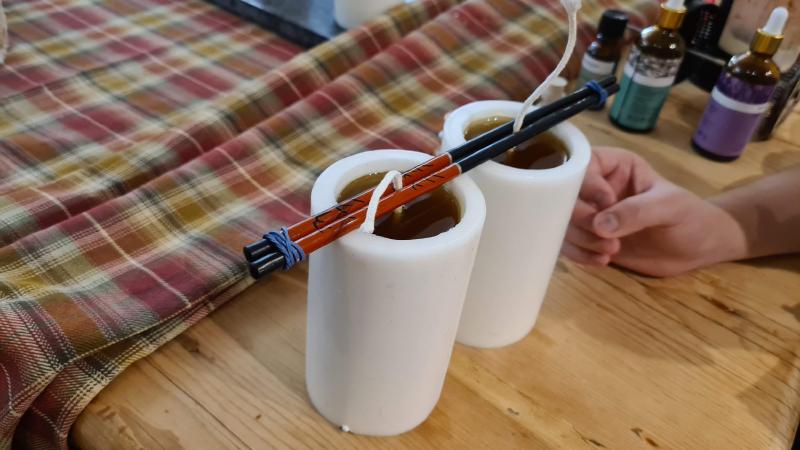
Chopsticks keep the wicks central
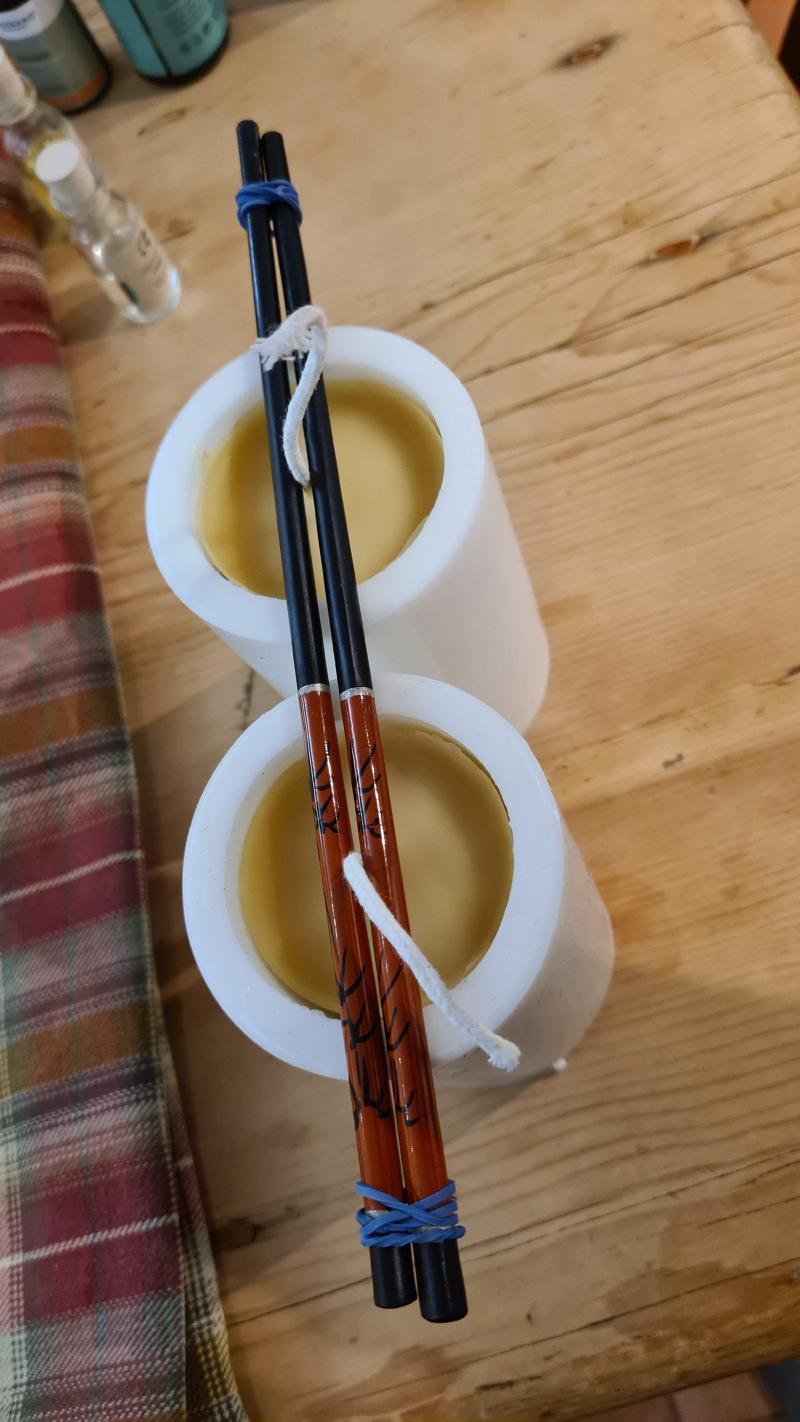
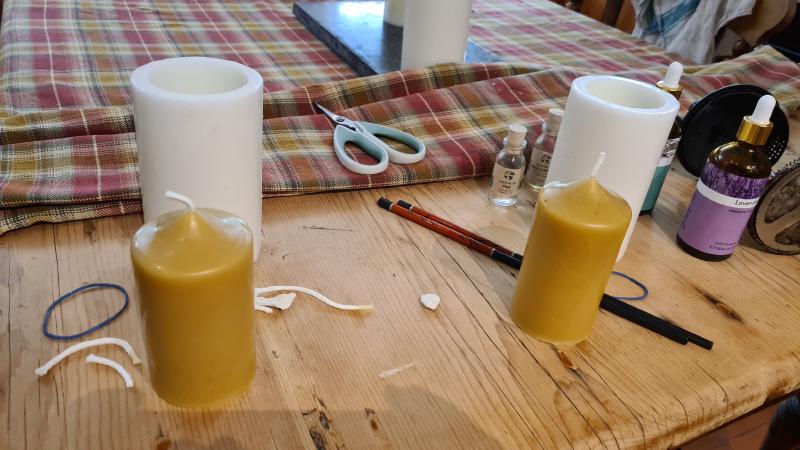
and wicks trimmed
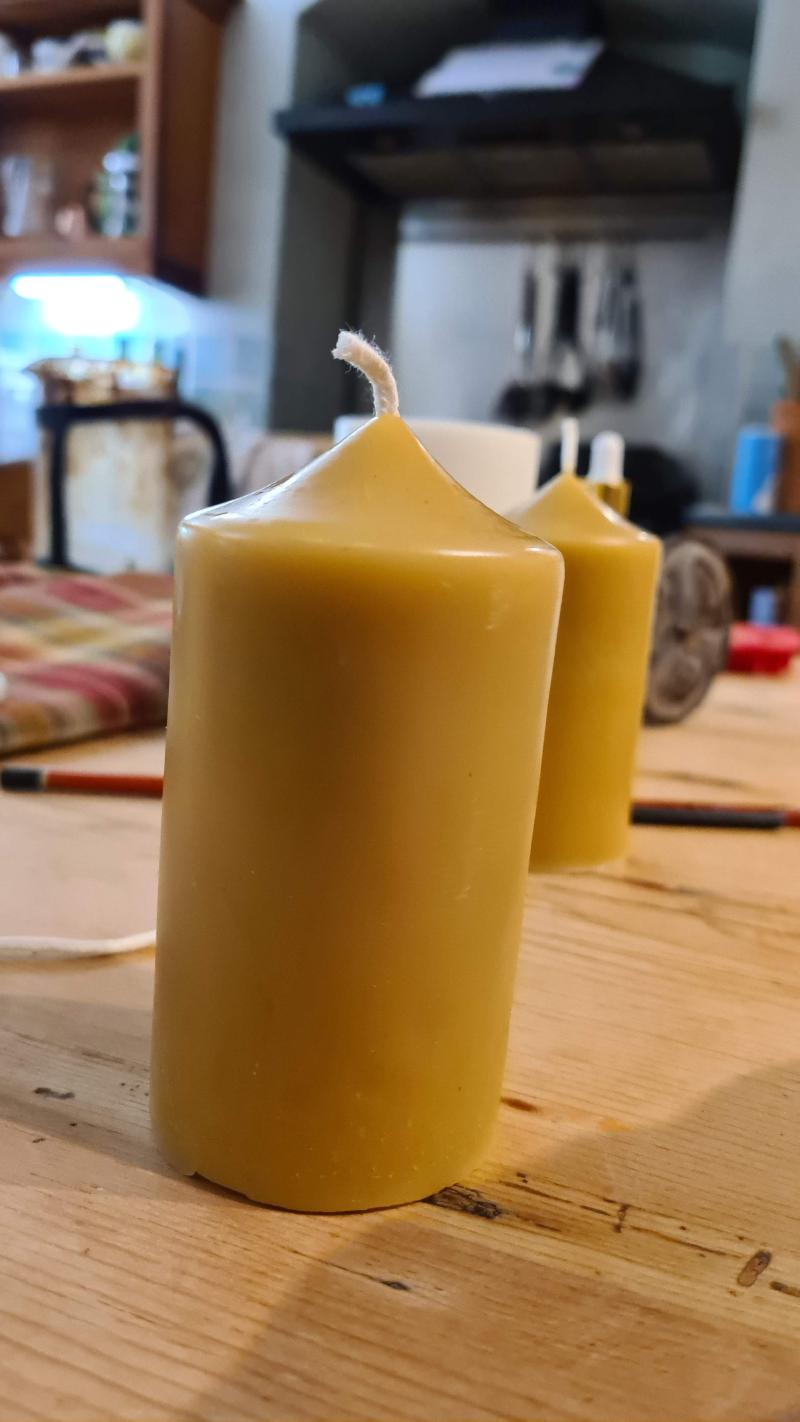
We added drops of essential oils to make scented candles - one cedar, one lavender.
The candles were quick to pour so this method is faster than making dipped candles, but it still begins with the long process of melting the wax, which warms the kitchen and provides a gentle aroma of honey.
Insulation
Clean-shaven hives in cork jackets.
Daughter Queens
Five queen bees...and a prime swarm in a pear tree.
Queen Elizabeth
We’ve just had a coronation.
Merry Christmas
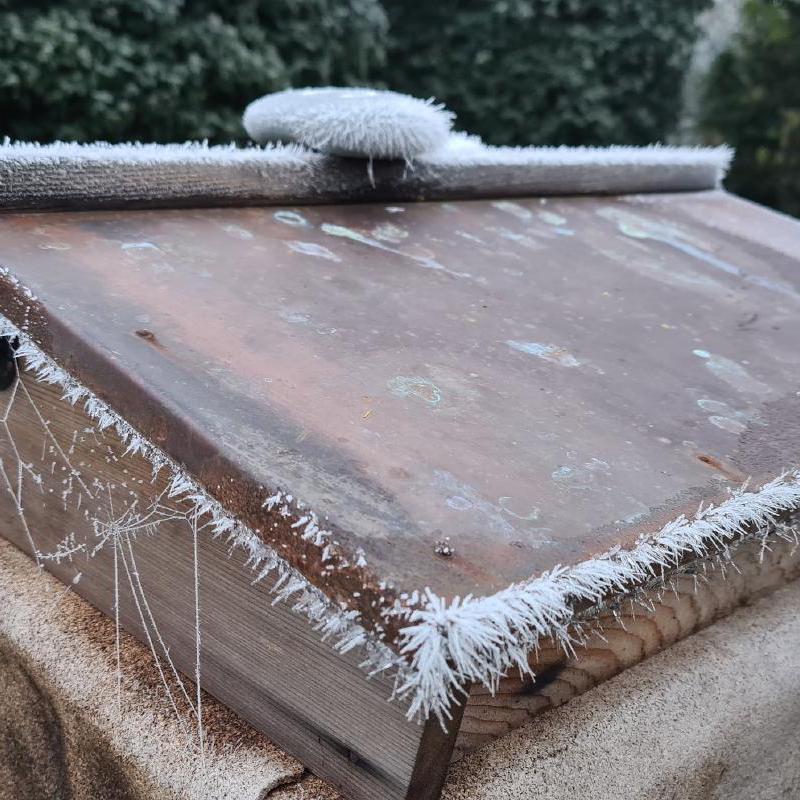
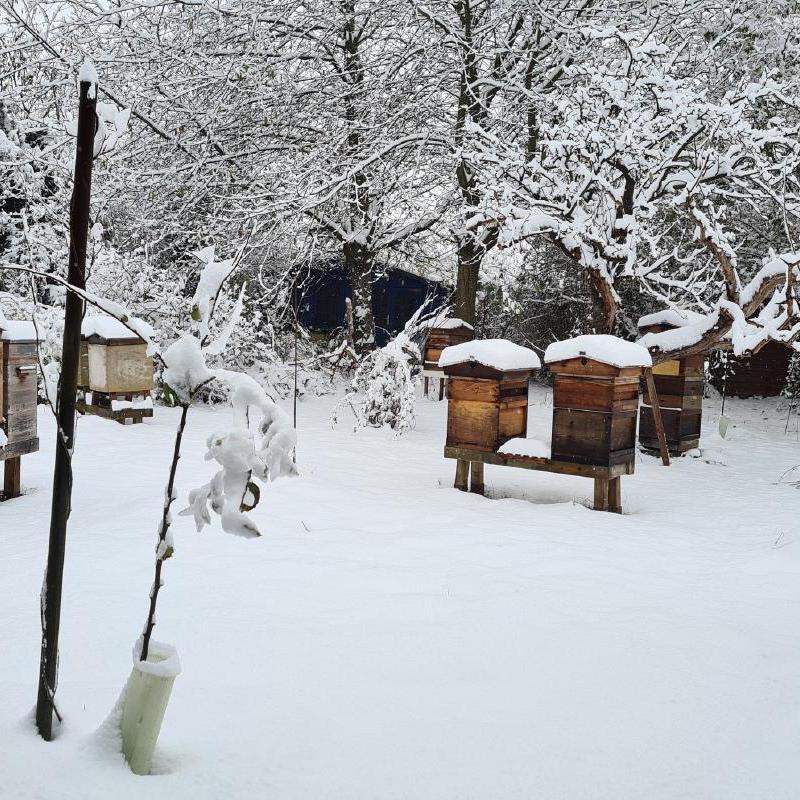

Wishing you all a Merry Christmas and a Happy New Year!
Thymol
The bees are hanging out.
Queenright
Following my serially unsuccessful efforts at swarm control this spring, fate took pity and gave me another chance to hive a cast swarm.
Queen in the box
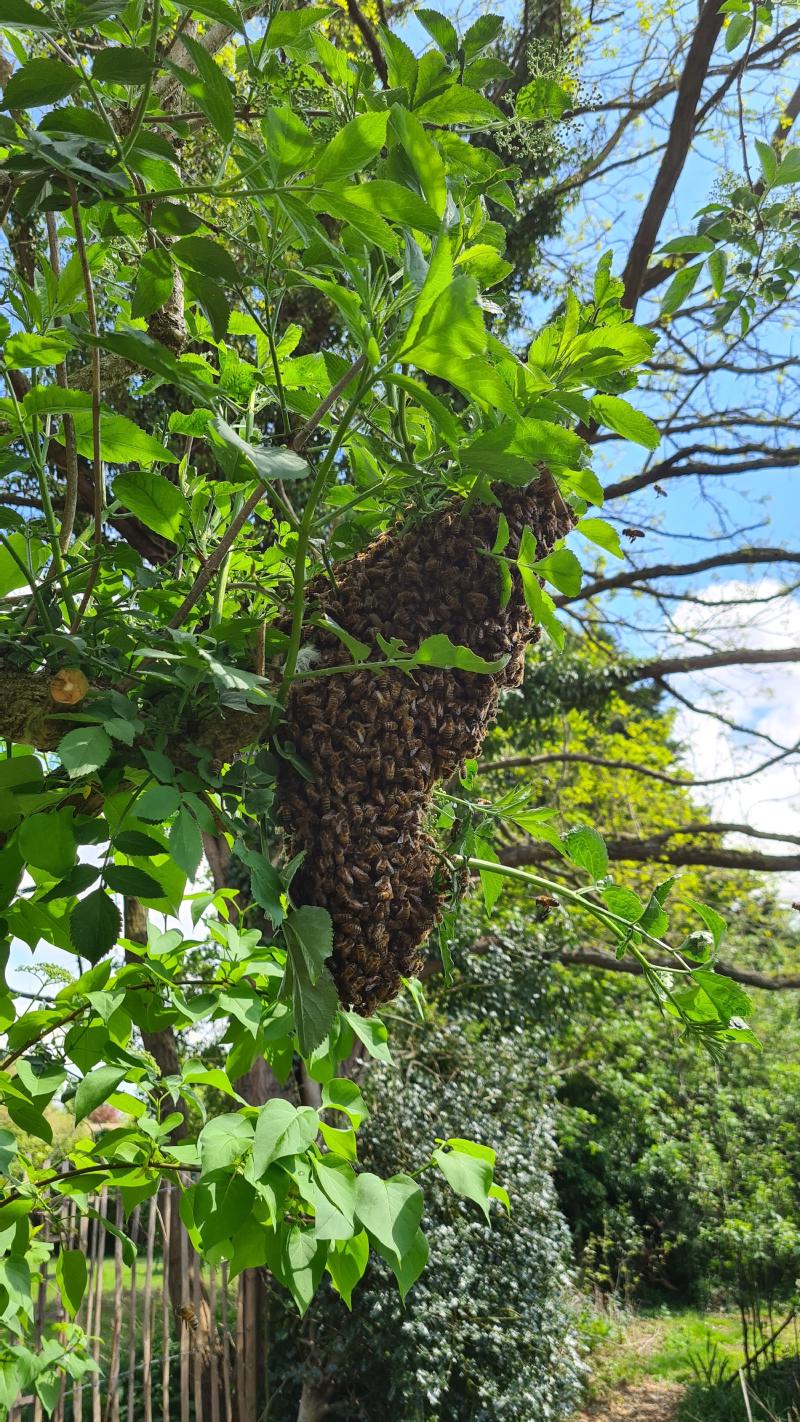
You just hold a container underneath, give the branch a sharp shake, and the swarm of bees drops neatly into the container with a satisfying thud. Yeah, sometimes it happens like that. But sometimes like today it happens like this: you hold a container underneath, give the branch a sharp shake, and about half the bees drop into the container, while a large number erupt into the air and a lot remain on the branch. So you put your first container (a skep) upside down on a sheet on the ground, with the rim propped up on a stone so bees can get in and pheromones can get out. Then you get your second container (cardboard box) and repeat the process, gathering another cluster of bees. Then you stand back and observe that quite a lot of bees are still in the air, and quite a lot of bees are still on the branch, and you don’t know where the queen is. So you put a third container (cardboard box) over the bees on the branch, and you go away and leave the bees to vote with their feet (or wings) for the container that the queen is in.
Zzzzzzzzz Aaaaargh
Plans A to C all fail and I arrive all sweaty and beaten at Plan Z.
Uncapping Drone Brood
I’ve managed to avoid doing this for 8 years.
Take Floor
Here I write about cleaning the floor. Oh my, such glamour in beekeeping.
My secret is out
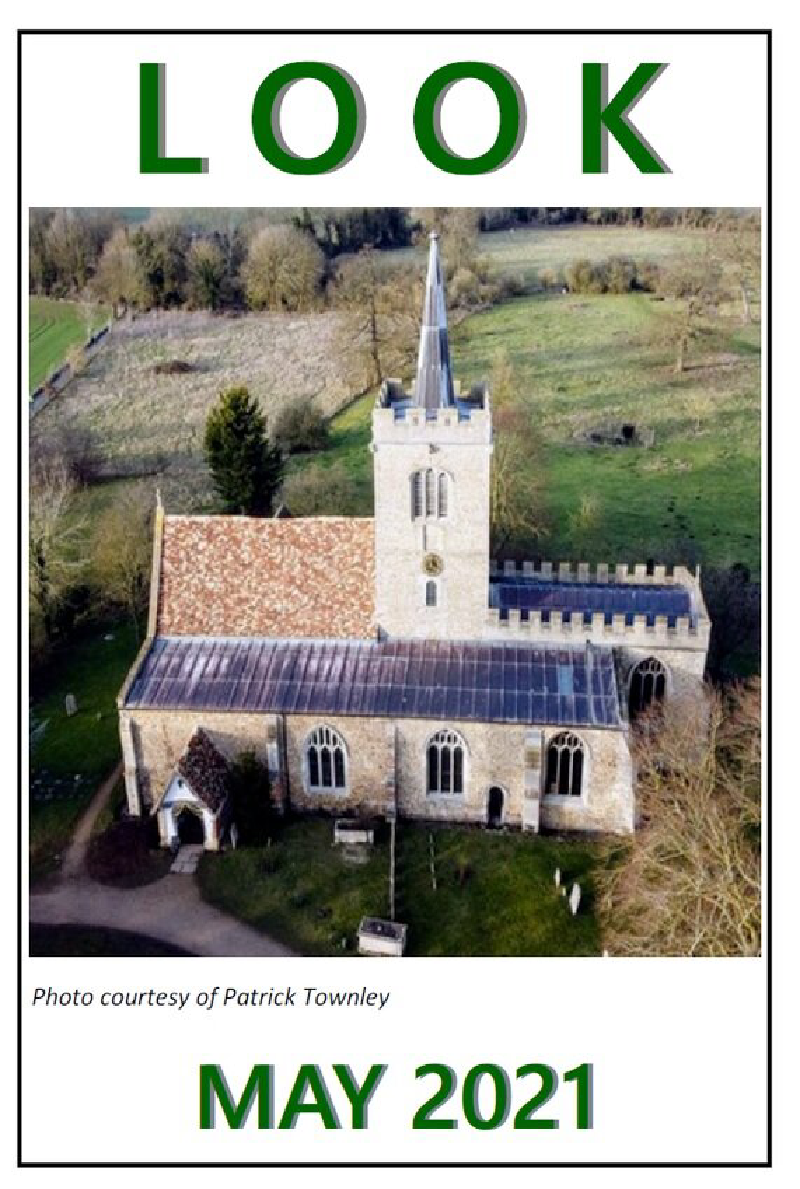
I’m featured as a beekeeper in this month’s issue of our village magazine, “LOOK”. I got a double spread - the centrefold, no less! No longer can I skulk around in mysterious anonymity. Fortunately, my real name was too complicated to be reproduced accurately in the article, so I hope to evade worldwide renown a little longer.
If you’d like to read it, the article is here.
Honey Safari
Three wild forest honeys.
On Sabbatical
I’m taking a gap year.
Boiling Brood Frames
Sterilising frames in my kitchen sauna
Spring Haiku
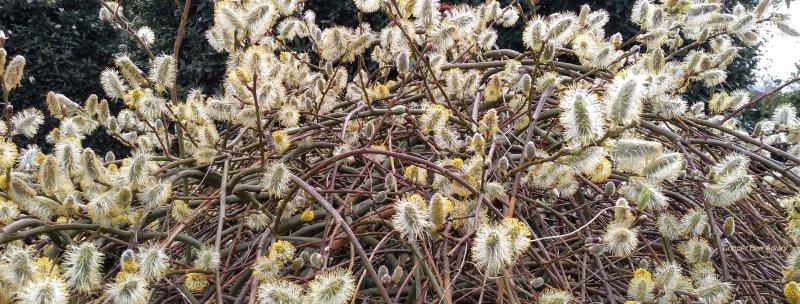
Spring sun warms the hive
Queen Uma’s bees are flying
My heart is hopeful
Winter took its toll
Queen Xanthe is here no more
Cold silent bee hive
Green buds unfolding
Promise of flowers growing
Bees will come again.
Name stones
Adopting the “object on hive roof” memo method.
Christmas Presents for the Bees
Merry Christmas, bees.
Queen Xanthe’s hive now has an insulating cork sleeve around the brood box, and a sugar board above it. And the second sugar board will be ready to go on Queen Uma’s hive tomorrow.
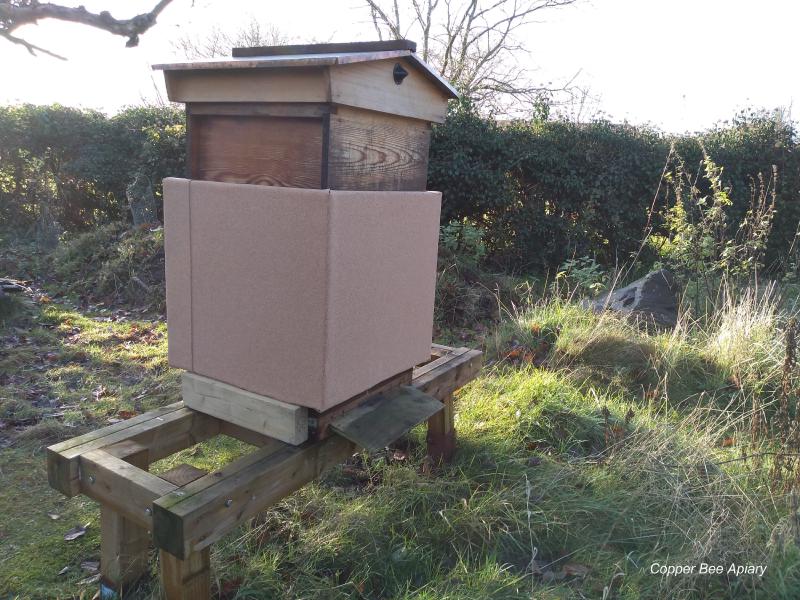
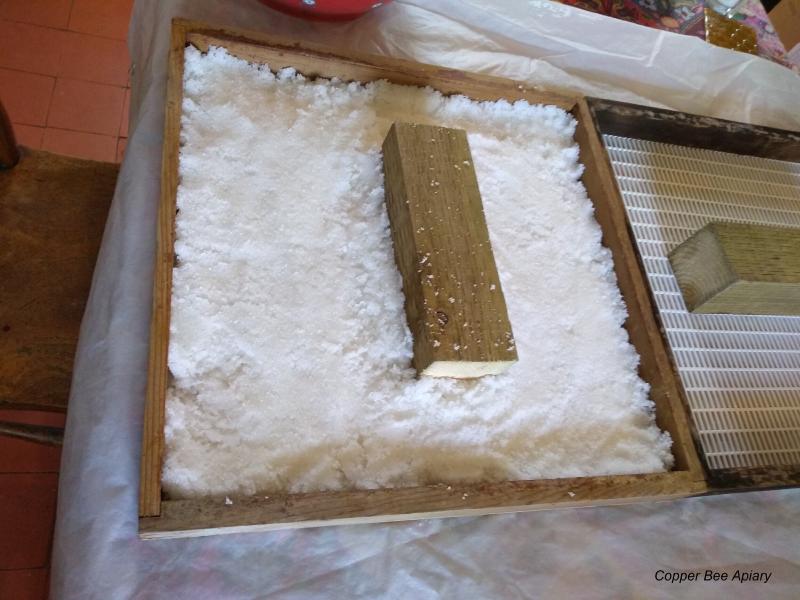
Frosty Morning
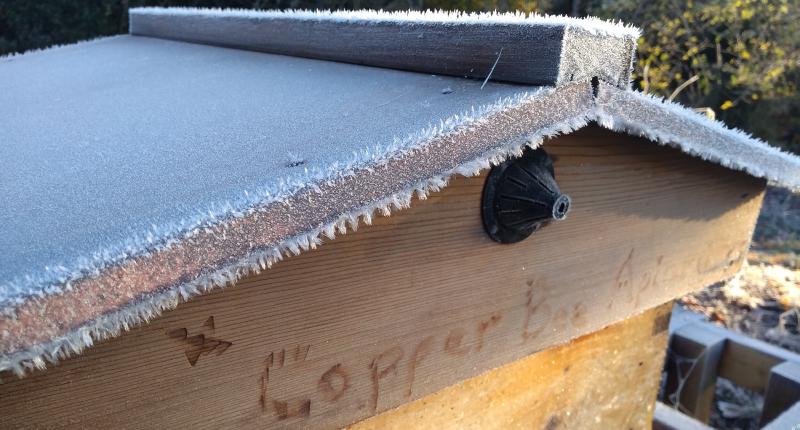
It’s frosty out here.
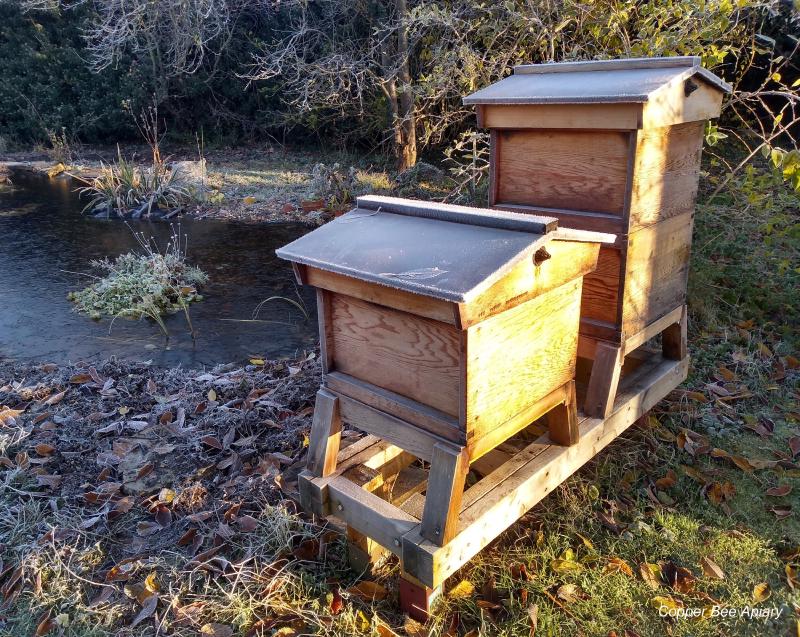
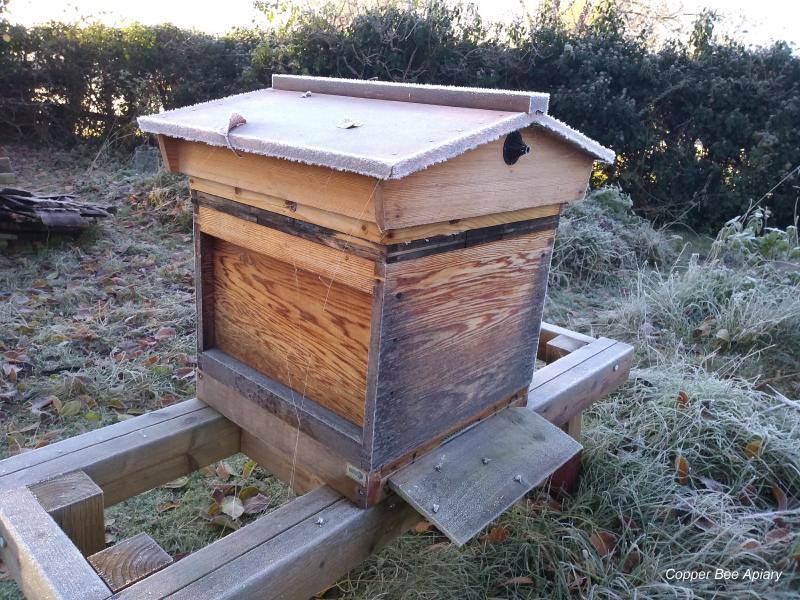
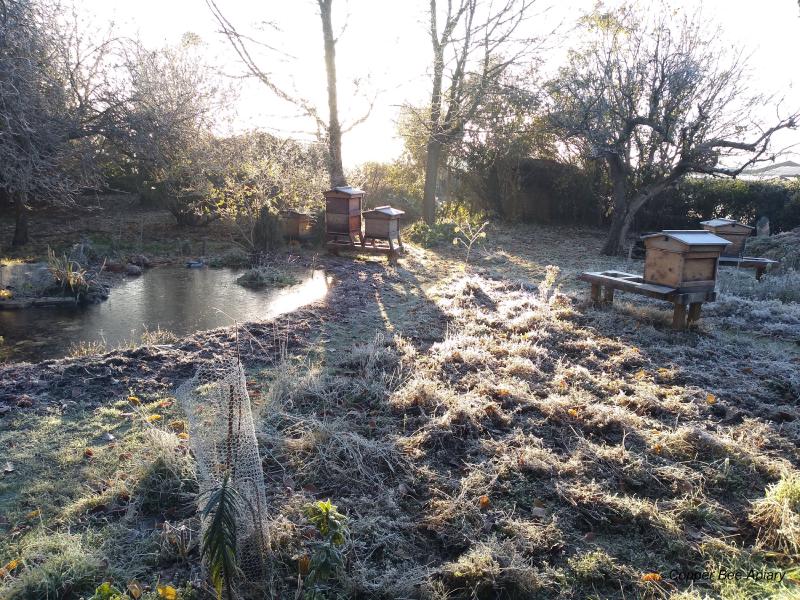
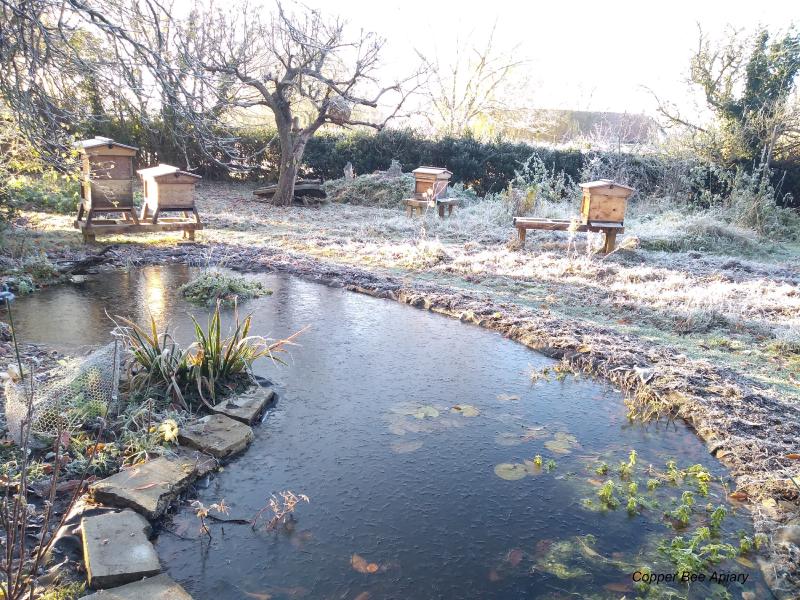
I’m working on a hive insulation project. More on that to follow. For now, here are some photographs of the frosty apiary.
EFB Picture Diary Part VI
Out, foul scourge
Plums
Does this count as honeydew?
The Roof Bees
Are the bees messing with my mind?
EFB Picture Diary - Part V
It’s good news.
The sun came out, and so did the bees
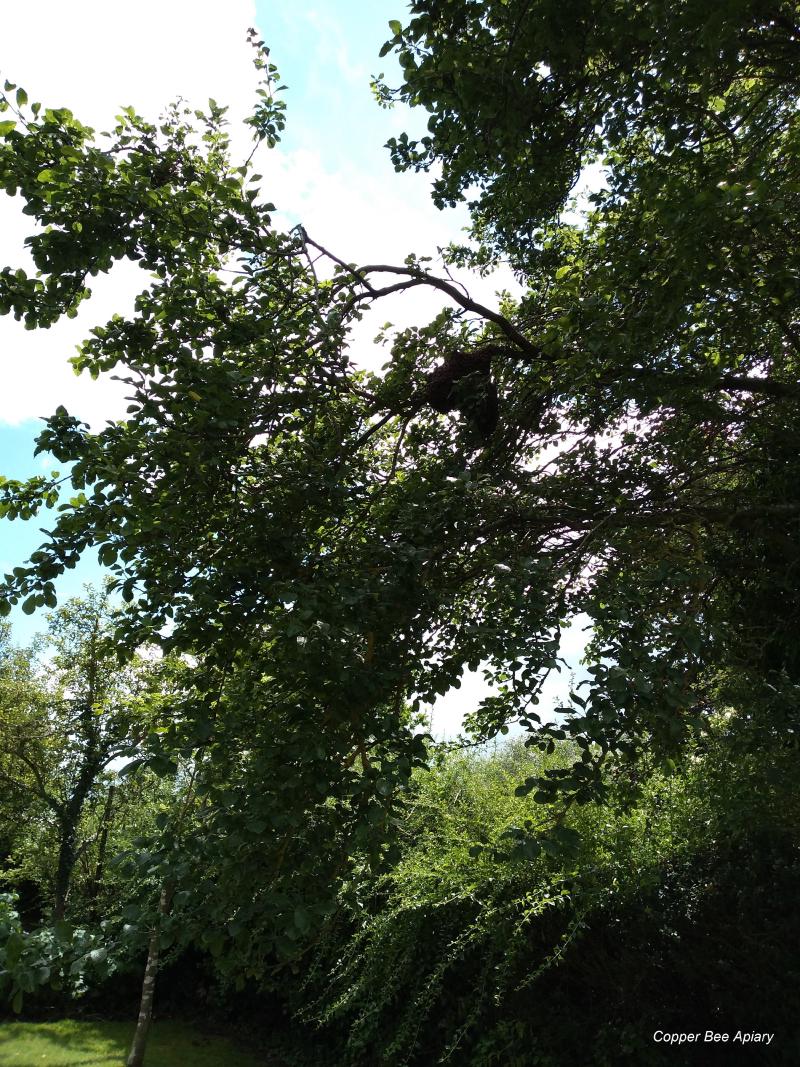
I saw them as soon as I stepped into the garden. That shape in the damson tree. I suppose it was predictable - weeks of almost constant rain and then, at last, a sunny afternoon. The bees must have been waiting for it just as we all were. They seized the moment and swarmed.
I don’t know who it is up in the tree. I’ve not been able to open the hives to see what the bees have been up to for at least a fortnight. They and I have been holed up inside wondering if it would ever stop raining.
Long Live Queen Uma
The bees that came in from the cold.
EFB Picture Diary - Part IV
It’s hard killing bees.
Swarm Collecting
The bees swarm on the first May bank holiday weekend, every year.
EFB Picture Diary - Part III
The fate of Queen Mab.
Shaken but not swarmed
Shook swarming.
Who mourns the wasps? Me.
Me and my lemon tree.
Very sloe sorbet
A delicious by-product of sloe gin production.
A copper spring
The beekeeping season has begun.
Deformed Wing Virus
Varroa volumises vexing virus.
We made landing boards
Hive improvements.
These strange days of summer
It’s been beekeeping weather in February. When it’s warm enough to be outside in a T-shirt, it’s warm enough to open a hive. But I haven’t.
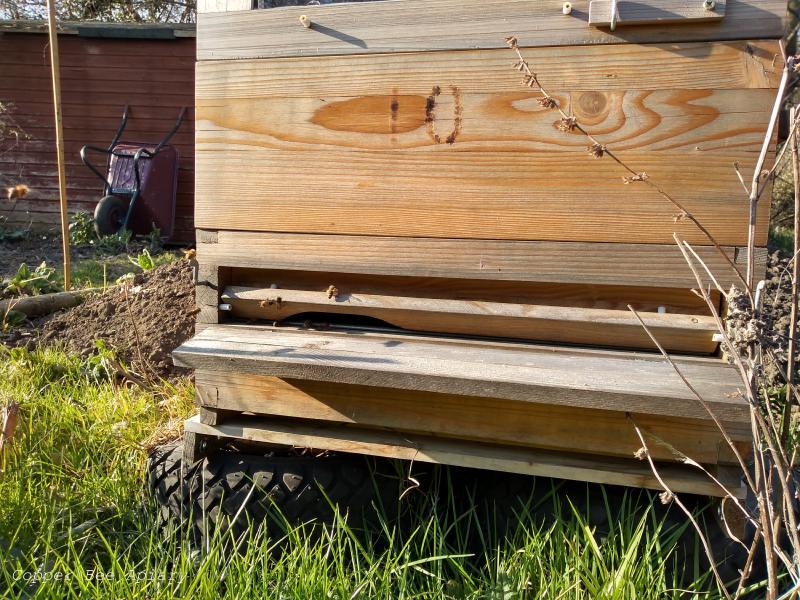
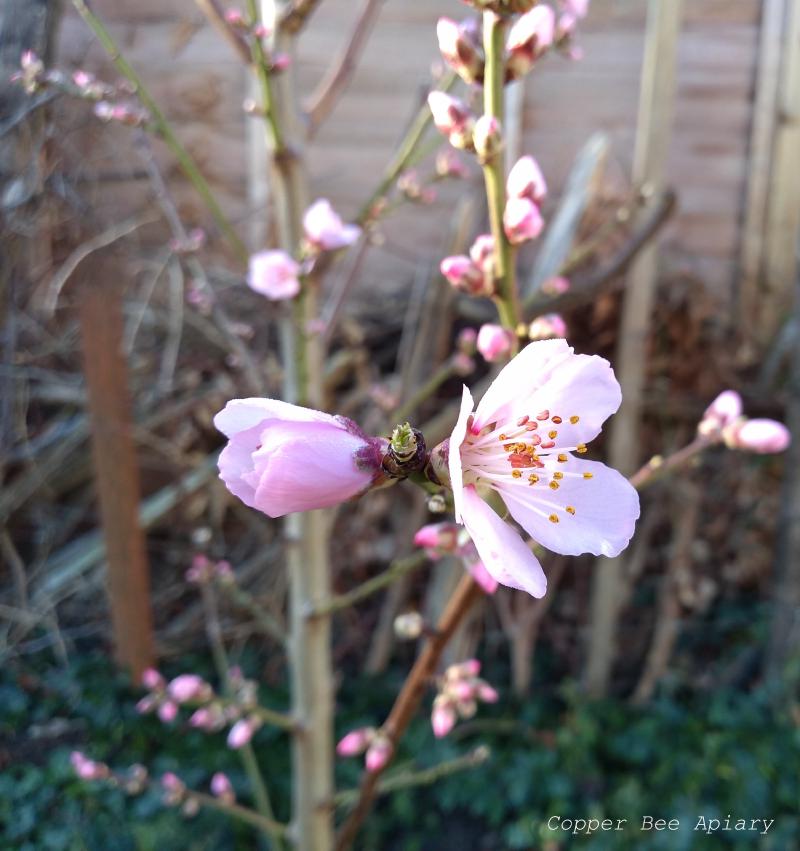
Flowers are welcoming the bees, and vice versa. Snowdrop, crocus and winter aconite are finishing now, but we have blackthorn, hellebore, grape hyacinth and - just opening - almond.
The bees have also been foraging for water from a pebble tray that I was temporarily using to water plants outside. It has become so popular with the bees over the past couple of weeks that I think I will have to leave it there. The pebble tray is particularly good as a water source because it warms up quickly in the sun so that the drinking bees don’t get chilled, and they can settle on the stones without risk of drowning. I will build a similar feature into the new apiary pond.
A great day for flying
Five Hives Alive
The Chemistry of Quince Jelly
Cookery of pectin
Sugar for my Honey
Literally.
Sugar Boards and Dry Boards
say the bells of Saint Whittlesford. Hive adaptations for winter.
Me Made Mead
Rhyming recipe
Merry Christmas
Buzz joke.
Sugar Boards
Winter feeding for beekeepers that don’t like winter feeding.
I have never lost a colony to winter
I’m not bragging. I just want to say it while I still can.
The Honey and the Ivy
A game for sunny autumn afternoons.
EFB picture diary - Part II
Bee disease insurance.
The Month of Yellow October
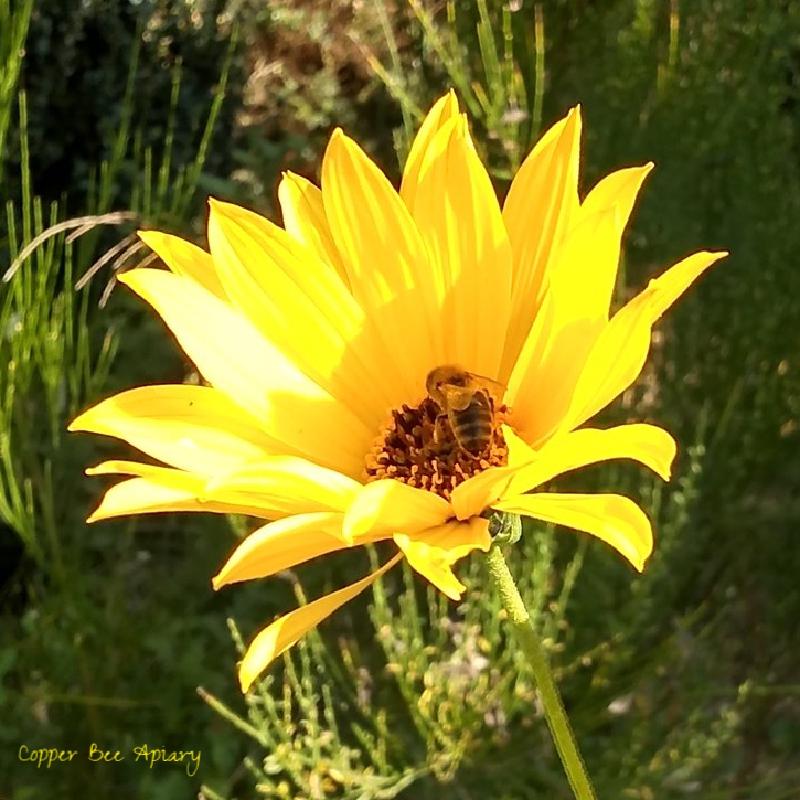
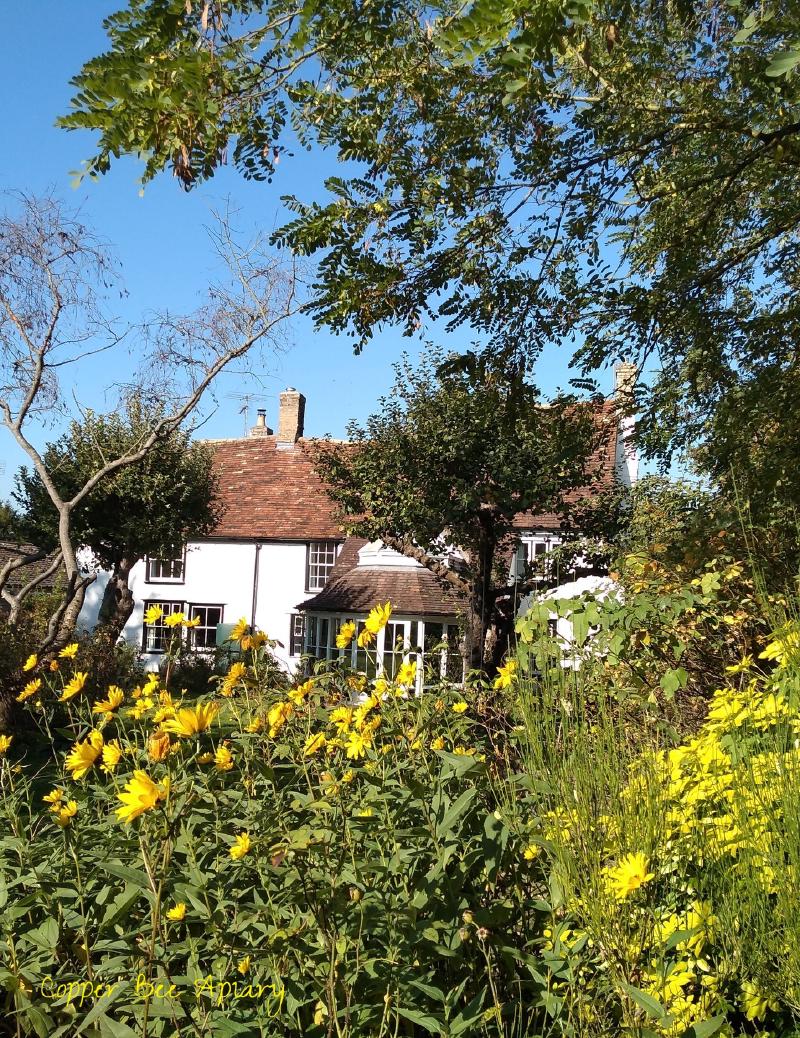
These flowers smell of chocolate!
They started flowering in the garden this month. So did the Jerusalem artichokes that I planted, which look and smell similar, but are very much taller, towering over the hedge and reaching for the roof of the house.
The flowers in the garden border are just the right height for watching the bees coming and going between them. Could they be dwarf Jerusalem artichokes, if there is such a thing?
Jar Geometries
New shapes and sizes
I have a little quince tree
We’ve found lots of fruit trees in the new garden, including several apple, two pear, two cherry and a plum. I’ve been planning to plant at least one quince tree. I planted one in our last garden. I love quinces. And quince jelly with honey is a product I hope to be able to make regularly.
But then, the other day, I found this in the apiary:
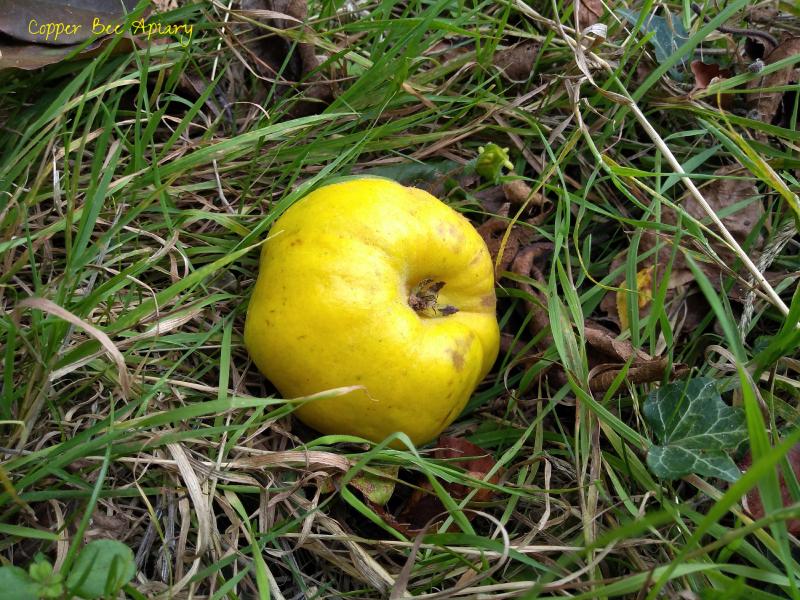
Which, unless I am very much mistaken, is a quince. It was lying underneath an overlooked little tree growing by the hedge. It had no other quinces on it, but looks plausibly like a quince tree. Hooray!
EFB picture diary - Part I
If you’re browsing for cheery content, this isn’t it.
Living Landing Boards
Hive with a goatee. Structural bees?
EFB questions, and some leads
Channelling Miss Marple
DEFRA, Disease, Destruction
Dark days
Hedge Competition
Win a jar of honey!
The Thistle Guards
Of bees, wasps and hornets
Floors and Doors
Home decor for the bees.
Ceramic Honey Pots
I hope to become a comb honey producer, but there is still a place for extracted honey in attractive packages.
No rain, no gain
Producing comb honey is a tricky enterprise.
Queen Titania from the Tree Hive
How it takes a fortnight to move bees 3 metres, but only half an hour to move them 15 miles.
A Hat Trick
A swarm in June beats a silver spoon.
Summer Solstice
The sun is shining and the bees are on lavender.
The bees come home from the orchard
Home are the bees, home from the trees!
Hive Stands
The beekeeper’s rather wonderful husband builds mighty stands for the beehives.
Ottilie, Peony & Queenie
First sightings of 3 new queens.
Apple Orchard Honey
The first honey harvest of 2018
Easy come, easy go
Swarm out, swarm in
Home is the Bee
Home is the bee, home from the tree,
Home is the sailor, home from the sea,
And the hunter home from the hill.
A Super of Crystallised Honey
Experiments with extracting and processing honey and beeswaxI'm Being Scouted
True to form, the local scouts are being prepared. The bait hive works!14.04.2018: Beekeeping season opens!
Long live the queens!Local crops
Keeping watch on the fields, and Beeing Connected.
The Bait Hive
Check this out, scouts.Blackthorn
This post contains equations.Colony in a Cold Snap
Plunging temperatures kill the babes in the wood.Significant Visitors
We are unexpectedly honoured by a visit from some important members of the local community.The Summerhouse
Come bee shed come tea shed.New roots, new shoots
January forageHives of Industry
Brooding on a dark January day.In the Dead of Winter
Sugar cakes for the bees.Beeswax Stars
Beeswax decorations for Christmas.Merry Christmas
Merry Christmas to my honey bees in the orchard, and to all bees everywhere.
The Hive at Kew
Impressions of my visit.Our New Home
The winter solstice is a new beginning.Bees, by Norman Gale
Pastoral poem.In the orchard
News of the evacuees.Evacuation
The bees are evacuated to the country.Looking forward to winter
The armchair side of beekeeping.Unfashionable Thoughts on Beekeeping
A school beekeeping club may save the bees...but not for the reasons they think.Happy Halloween...
…from the monsters of Copper Bee Apiary.
Quince Jelly
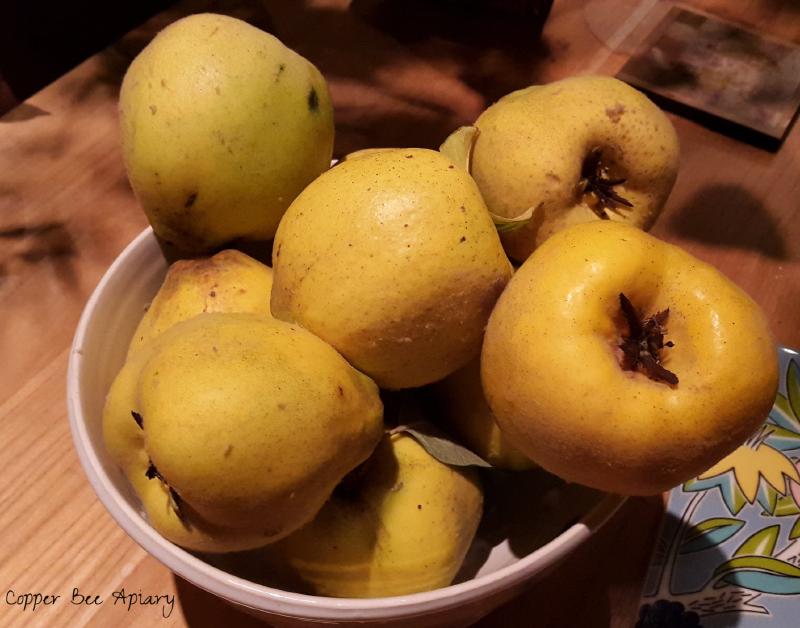
The quince tree produced a bumper crop of about 15 this year. Growing in the midst of so many beehives, it was of course very well pollinated! Optimistically I prepared 8 clean jars as I set about making quince jelly with honey. In the end I filled just two jars. A deep red colour. That’s a lot of quinces concentrated into each jar. To be enjoyed with cheese and walnuts at Christmas…if it lasts that long!
Branding by Branding
The CuBA brand.What Goes Up Must Come Down
I unite a big and a small colony in preparation for winter.Busy October Bees
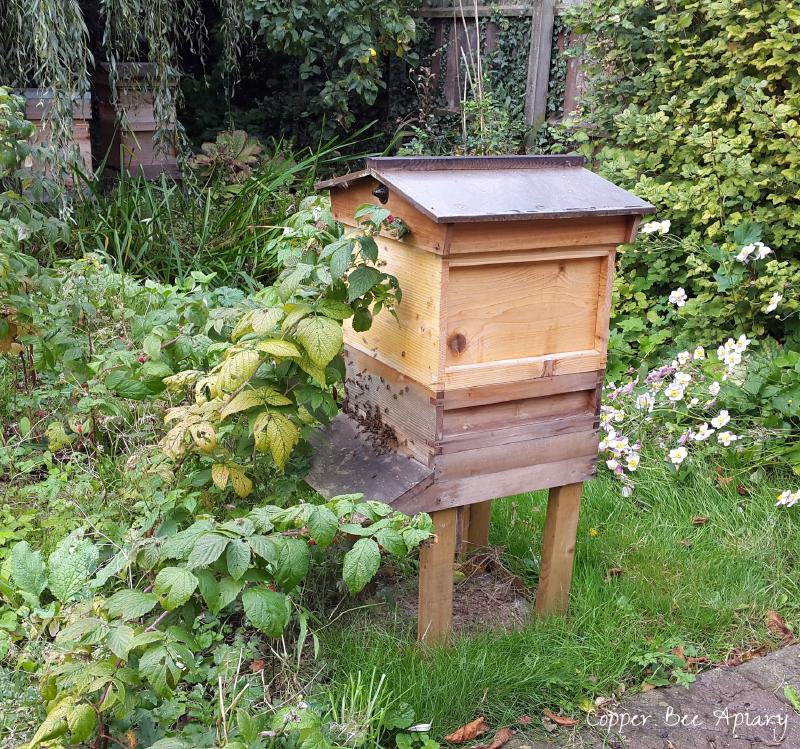
7th October. Copper Hive bees in the blustery drizzle.
Autumn Activities
My bees and I make plans.Back with a Vengeance
The Disc Hive returns.Meadow Mown
The August bank holiday weekend is a good time to do the annual cut of the wildflower meadow, as it has mostly by now gone to seed, with just the feverfew, marigolds and a few borage still flowering. Cutting it was complicated by it containing a forest of raspberry canes that weren’t intended to be there but which I’d quite like to keep, as well as by it being in the flight path of a large number of honey bees. Nevertheless I have now cut it and it looks like this:
Exploded Drone II
Who's the Daddy?Roar of the Bees
We had a good spring for honey, but it seems to be a poor summer. The supers are light - very little honey in them. And the colonies are relatively small. It used to be that the bees would overflow when I opened a hive - not so any more. Now I can lift out frames without even having to nudge many bees out of the way.
With autumn on the way, the colonies are shrinking fast. You can tell this by looking at the brood frames even at a single point in time. A brood nest full of eggs and young larvae indicates an expanding colony, whereas a nest that has more capped brood than young larvae indicates that the queen’s rate of egg laying is decreasing. In the Pond Hive brood box, almost all the brood is capped - I had to search hard to find eggs and larvae. The current capped brood will emerge as new adult bees that will become autumn foragers, but there will be fewer and fewer young bees coming through after that.
A French Approach to Beekeeping
The French famously have the month of August off as holiday - Les Grandes Vacances. As an English office worker I scowl enviously across the Channel.
But in the apiary I am taking the French approach and leaving the colonies undisturbed for the month.
As much as I can, anyway. There are a few things I didn’t get round to in July. But in general there is no need to open beehives in August. The bees can be let be. Now, where’s my deckchair?
Refugees
Beekeeping - a source of so much GUILT. Today, shaking out laying workers.The Tragedy of Queen Jasmine
It's a sad day in the Cedar Hive.Mini-update on the Disc Hive
I’ve been visiting the Disc Hive at the farm from time to time. I’m pleased to report that it has not been knocked over by wildebeest. However, Queen Irene’s colony are a defensive bunch. The eldest bees in this colony will pre-date Queen Irene, as they will be daughters of the previous queen, Queen Honey. It may be that it is these elder bees who are the defensive ones, in which case the mood of the colony may change over the next few weeks as these workers die off and are replaced by Queen Irene’s daughters, if those bees have a mellower temperament. But my hopes are not high. I fear Queen Irene’s daughters will be little better.
Stronger Tincture of Propolis
A deeper shade of orange, and a glimpse into the materialistic mindset of your favourite beekeeper.Exploded Drone
In which the private life - or rather death - of a drone is unceremoniously examined under the glare of a microscope.Wildflowers!
Knocking the socks off a lawn.CBKA Practical Apiary Meeting on Inspections & Apiary Management
Learning from other beekeepers.The Piper at the Gates of Dawn
New queens announce their arrival.May 2017 Honey
If you think that beekeeping is all about honey, then this post is for you.The Hidden Princess
The good bees triumph over the wicked witch.Disc Hive goes to the Farm
The Disc Hive bees have been having big adventures this year.
Headed by Queen Honey, they surged into growth this spring, and I only just split them in time to stop a mid-April swarm. After that, I split the top colony again, by transferring Queen Honey and half the brood into a nucleus box, leaving the remainder to raise a new queen. But despite my interventions, they swarmed. I think I left too many queen cells in the lower colony, so they produced more than one new queen, and had enough flying bees for one of those queens to leave with a swarm.
Uniting
Beekeeping here over the past few weeks has been complicated and labour-intensive. Taking hives apart, dividing colonies, lifting heavy boxes, climbing on chairs, opening and closing different sequences of doors like on a magician’s box, poring over notebooks with a furrowed brow, re-assembling hives and then wondering whether things are the right way round. Beekeeper and bees alike are a little frayed.
But swarm numbers are significantly down on last year, despite having more beehives this spring than last, so we can say all this effort has been at least moderately successful on that front.
Healthy Venom
A Bee Inspector calls.The Young Princesses and the Wicked Witch
Starring the beekeeper in the role of the Wicked Witch.Swarming
The post I hoped not to write this year.Four Happy Hives
Today’s statistics:
- Beehives opened: 4
- Brood frames inspected: 44
- Gloves worn: 0
- Stings received: 0
- Surprises: 2
I’ve been in the habit of wearing those disposable thin latex gloves when I’m working in the beehives. They are easy to change between hives and they keep the propolis off your fingers. But the box ran out the other day without my having noticed we were getting low, so I’m gloveless now. It went fine today inspecting the hives without gloves. When you get bees all over your hands it does tickle! But it’s also a little easier to feel when there’s a bee in the way when picking something up or putting it down, so it could be an improvement.
Vertical Splitting of the Disc Hive and the Pond Hive
The bees have seen this coming.A Queen on my Hat
There is a queen bee teleportal field right next to the Cedar Hive.Preventing Swarming
In which I look for the queen, find the queen, and build my tallest beehive.BBKA Spring Convention 2017
My first visit to this annual event - the Spring Convention of the British Beekeepers Association.Spring Opening of the Cedar Hive
In which I nearly lose Queen Eve...I think.Spring Opening of the Disc Hive
I took the lid off the Disc Hive and the bees boiled over.Spring Opening of the Pond Hive and the Copper Hive
I had a first proper look at the frames in the brood boxes of the Pond Hive and the Copper Hive.Almond Blossom
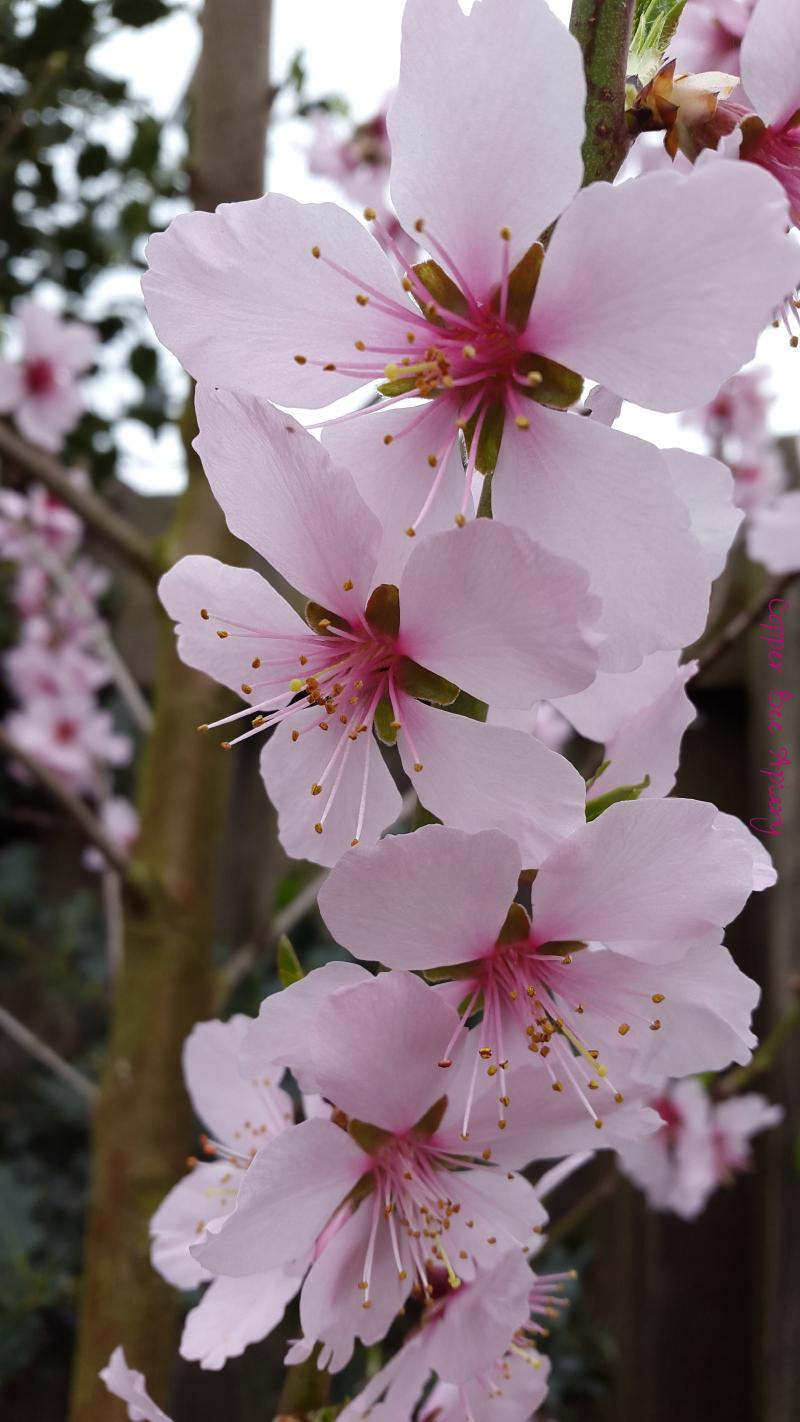
My photo album indicates that the almond tree flowered in January last year. This year, it’s late, having waited until March for bud burst. It’s flowering whole-heartedly now though.
Almond trees are (supposed to be) one of the earliest trees to flower. Which is helpful for the bees, who need that early nectar and pollen to get going at the start of the season. And my hope is that this tree will grow tall and provide a little shade and screening for the hives that stand against the South-facing house wall.
We have lift off!
This past weekend saw the opening of the first flower on the almond tree, of the first flower on the flowering currant, and of the beehives.Old Library Botanical Exhibition at Christ's College Cambridge
I went along to this exhibition this afternoon.Winter Flowers
We have a Christmas Box (Sarcococca) in the front garden, covered in sweet flowers, which the bees have been visiting.
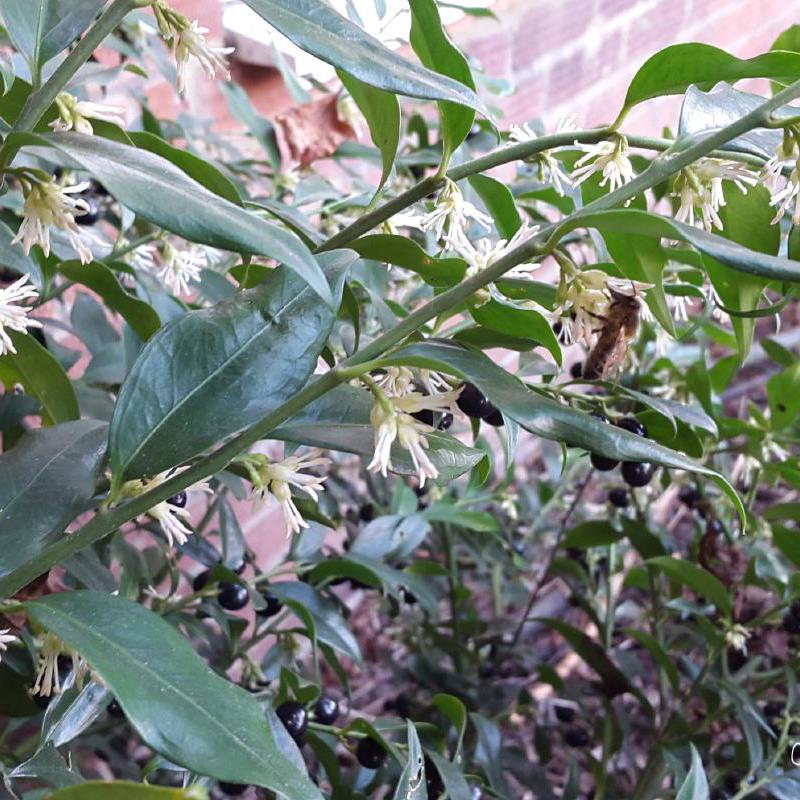
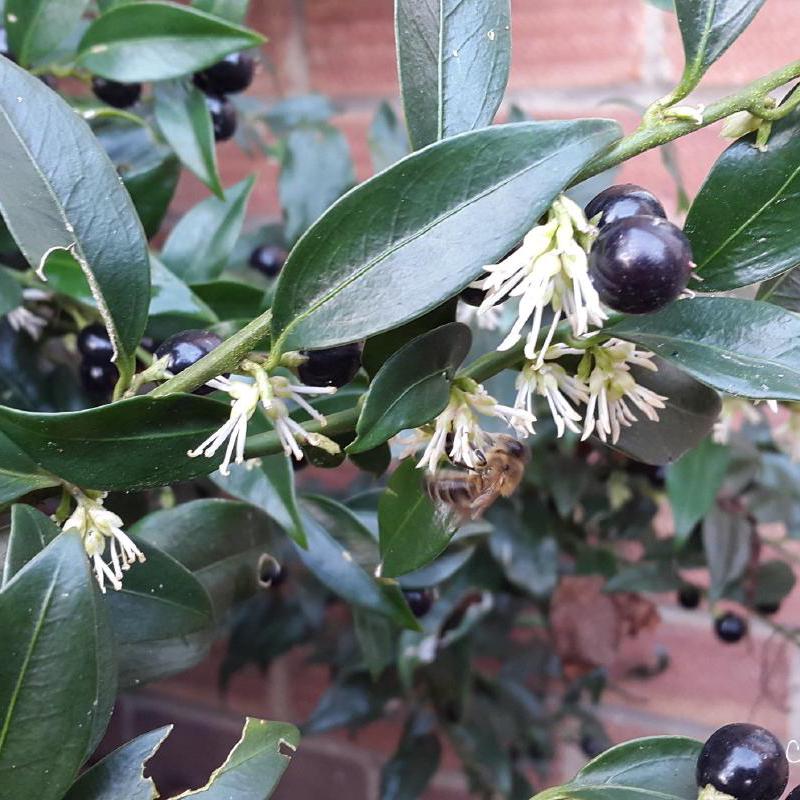
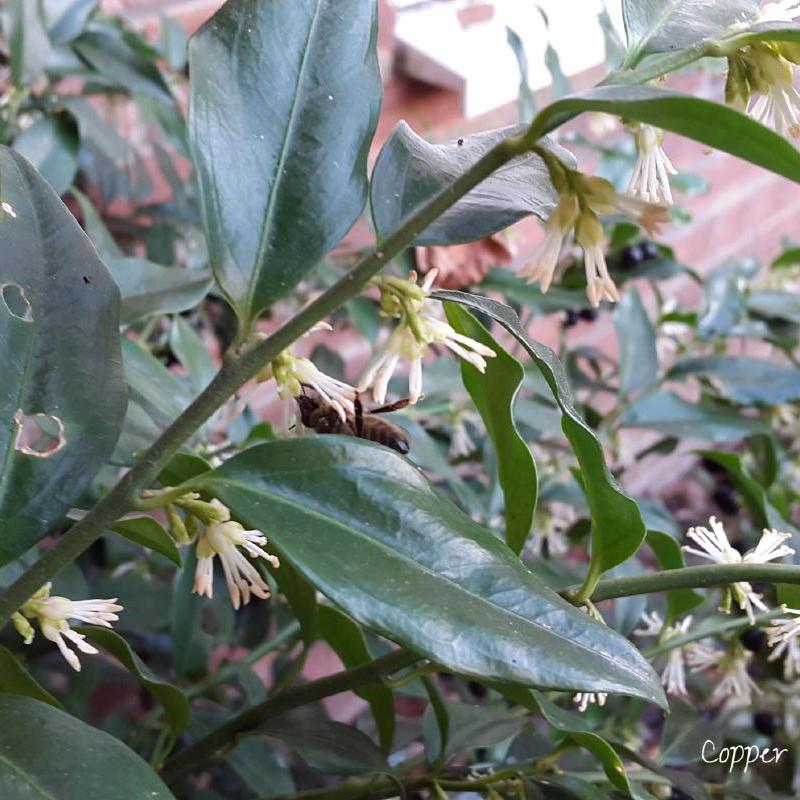
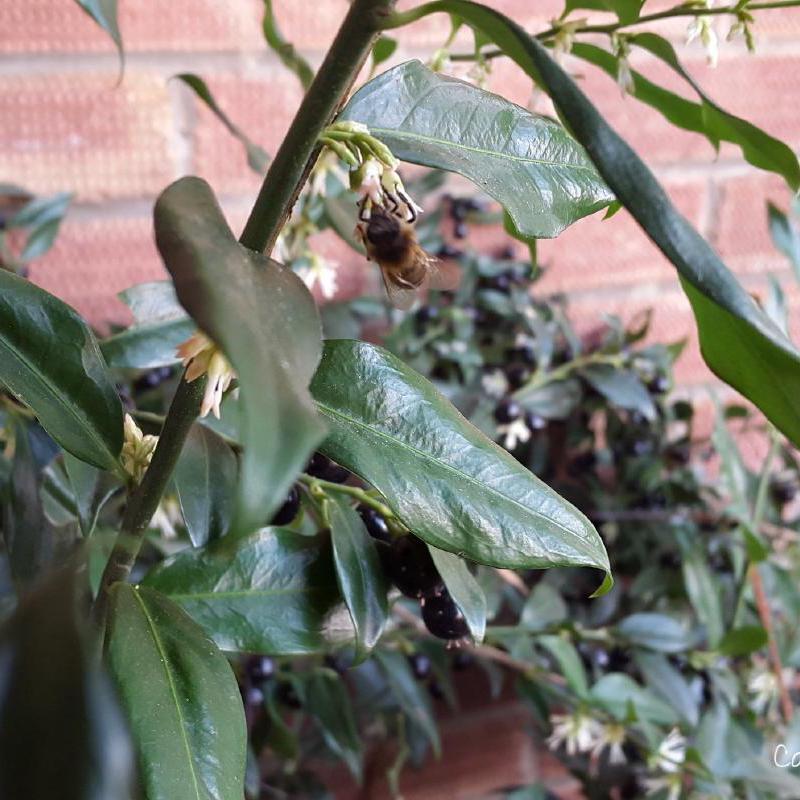
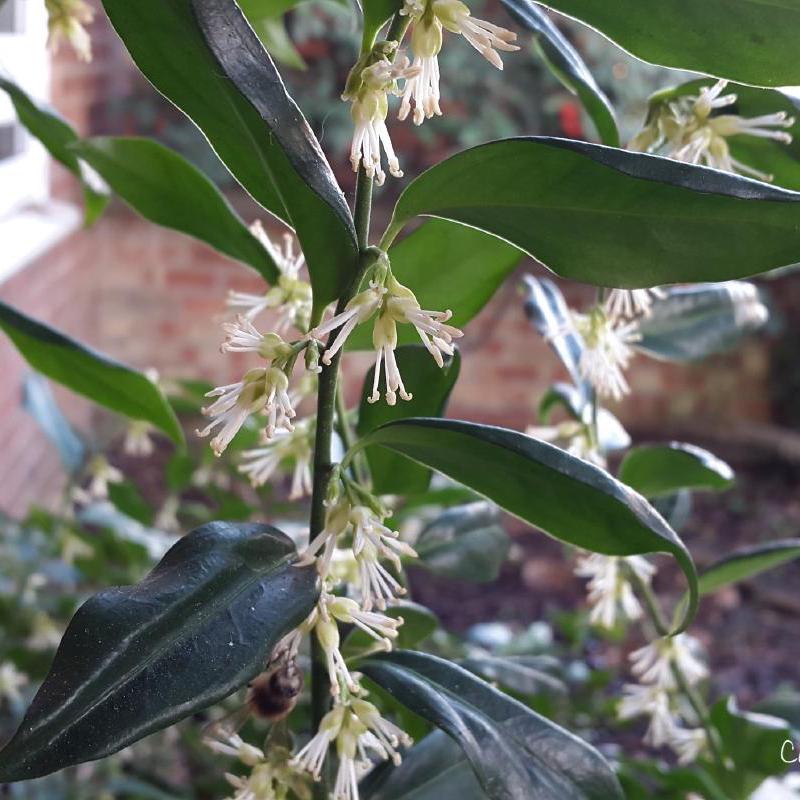
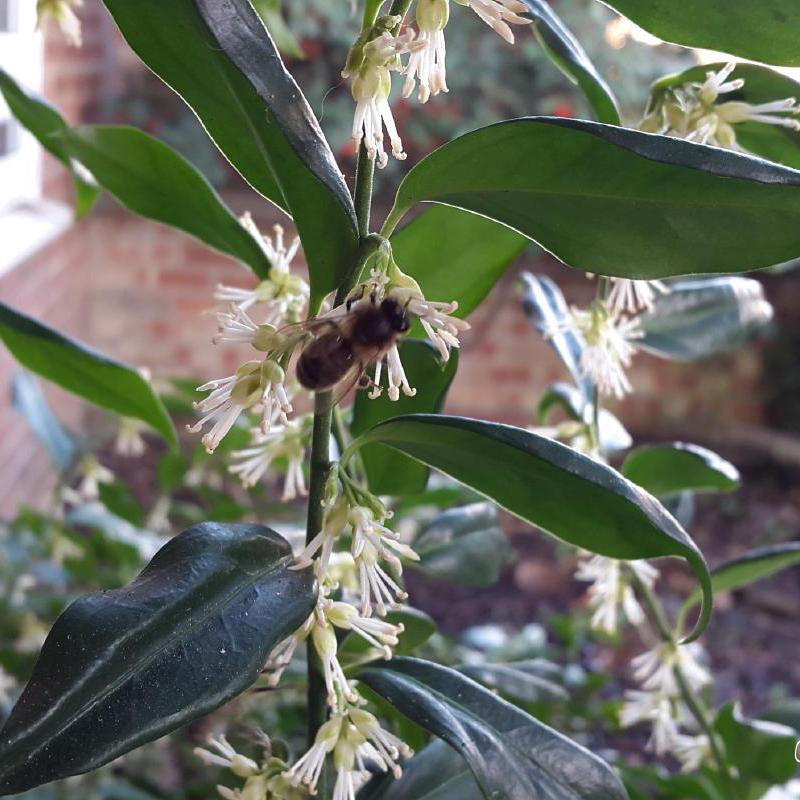
They seem to be collecting nectar rather than pollen. Their pollen baskets are empty and I think in a couple of the photos you can see that they are extending their tongues into the base of the flowers. Here’s a close-up:
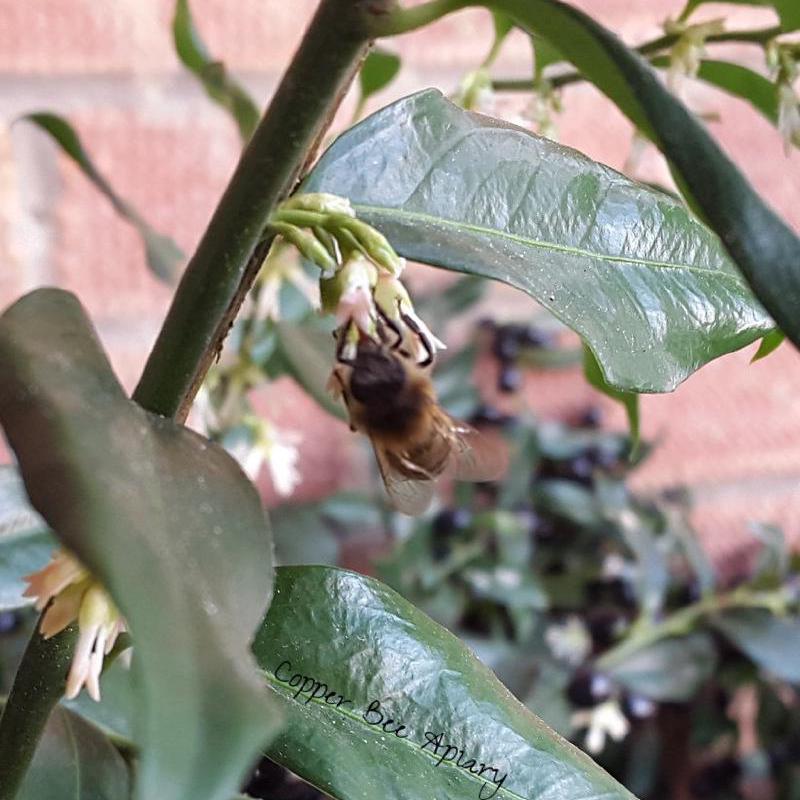
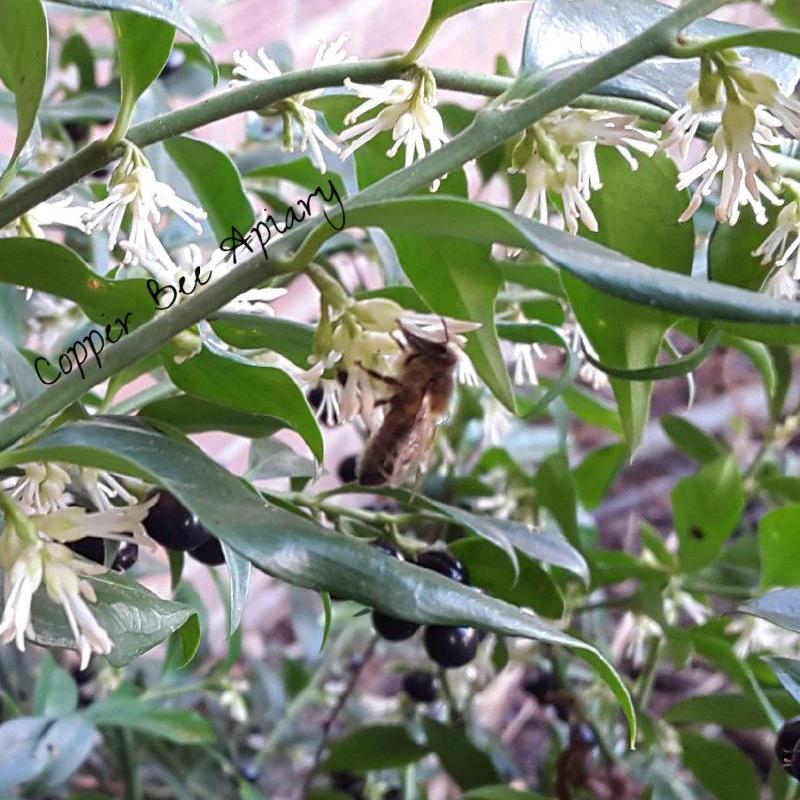
Incidentally, a word about photographing bees on flowers. Bees are too busy to pause for many Kodak moments. And if they do, you can be sure my camera will be focusing on something else. I suppose that’s why BBC Wildlife Photographer of the Year tends not to be won by people who’ve just whipped a camera phone out of their pocket.
Keeping a lid on it
Today is not the day.Listening
It’s 7 degrees Celcius (45 F) outside, and even though we’ve had some sunshine there haven’t been many bees flying from the hives today. It’s too cold and anyway there’s very little forage available at this time of year. So all is quiet. I went out on to the gin terrace and put a stethoscope to the wall of the Disc Hive. I listened. At once I became aware of how noisy it actually is round here - a light aircraft was passing overhead, traffic was rumbling, and then for good measure a train went past. The bees were probably huddled inside trying to get some peace.
Agatha Christie: 9 Honey Bees
This morning, nine dead worker bees were lying on the landing board of the Pond Hive. What - or who - killed these bees, so close to their own front door?Microscopy
Dear Mum,
Thank you very much for the Christmas microscope. It is exactly what I wanted.
The basic functions are easy to use so I was able to start playing with it straight away. It also does quite a lot more advanced things that I have yet to study so there is definitely “scope” for further investigations.
You can look directly through the eyepieces and/or you can connect it to a computer to see the images on-screen and take photographs and videos. I had a look at some wax, honey and pollen scooped from a honeycomb.
Pond Hive
It makes a less interesting story, but the transfer of the Pond Hive to a new hive stand went smoothly today. There was no butterfingers moment involving dropping a box of 10,000 bees, no slippage of the hive layers to release a furious cloud of stings, not even a murmur from the hive residents in fact.
“In situ replacement”: we lifted the hive off the old stand and placed it on the new, then took away the old stand and lifted the new stand and hive as one piece on to the original site.
Preparing for Spring
A bright January day and the buzz is back.
Bees are active in all the hives, even Pond Hive which is always the last to get up in the morning.
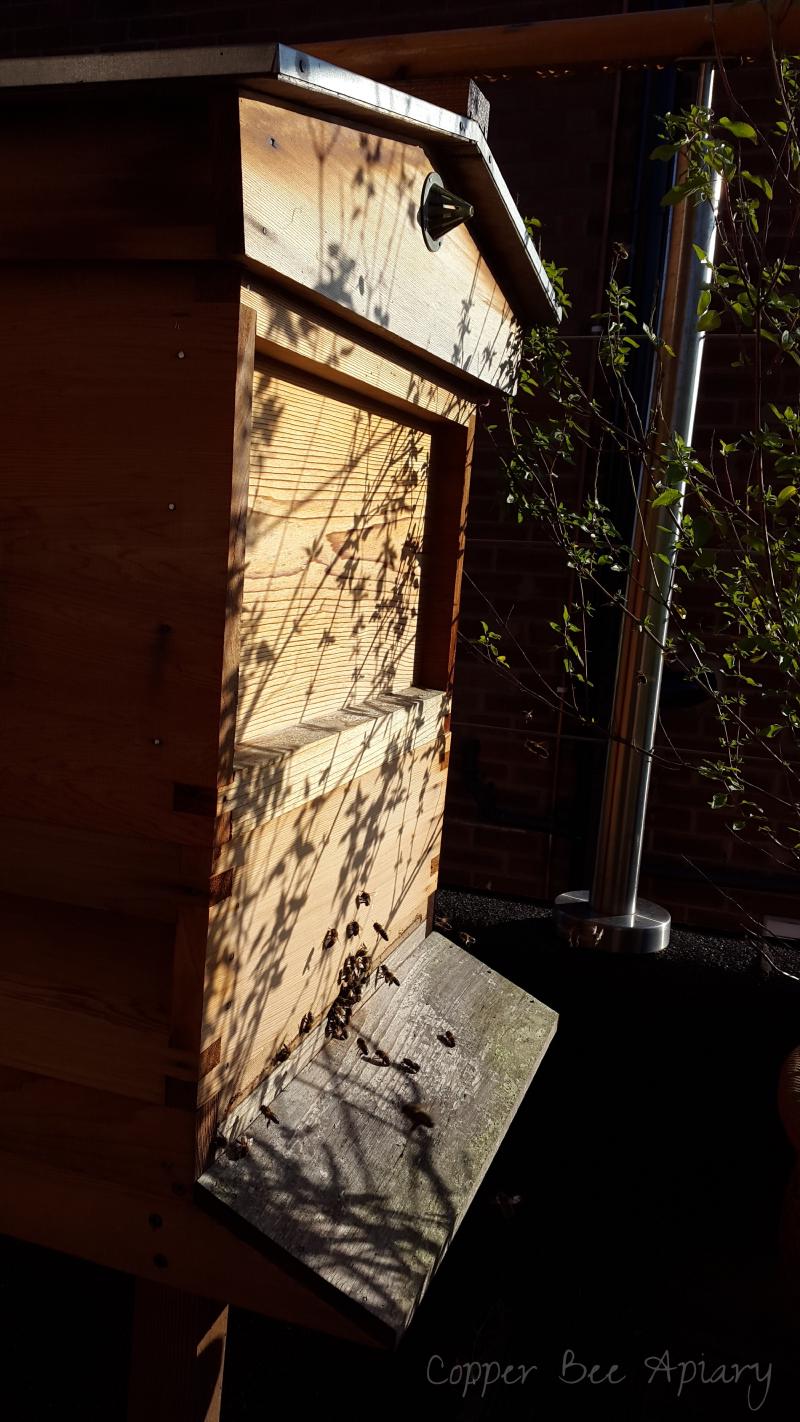
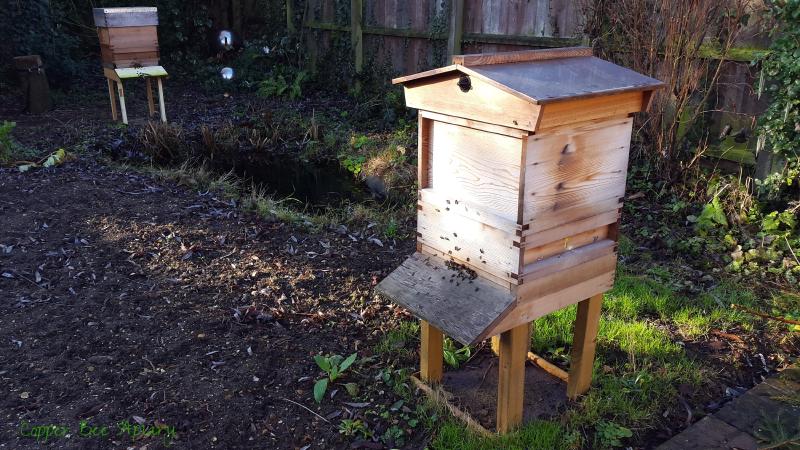
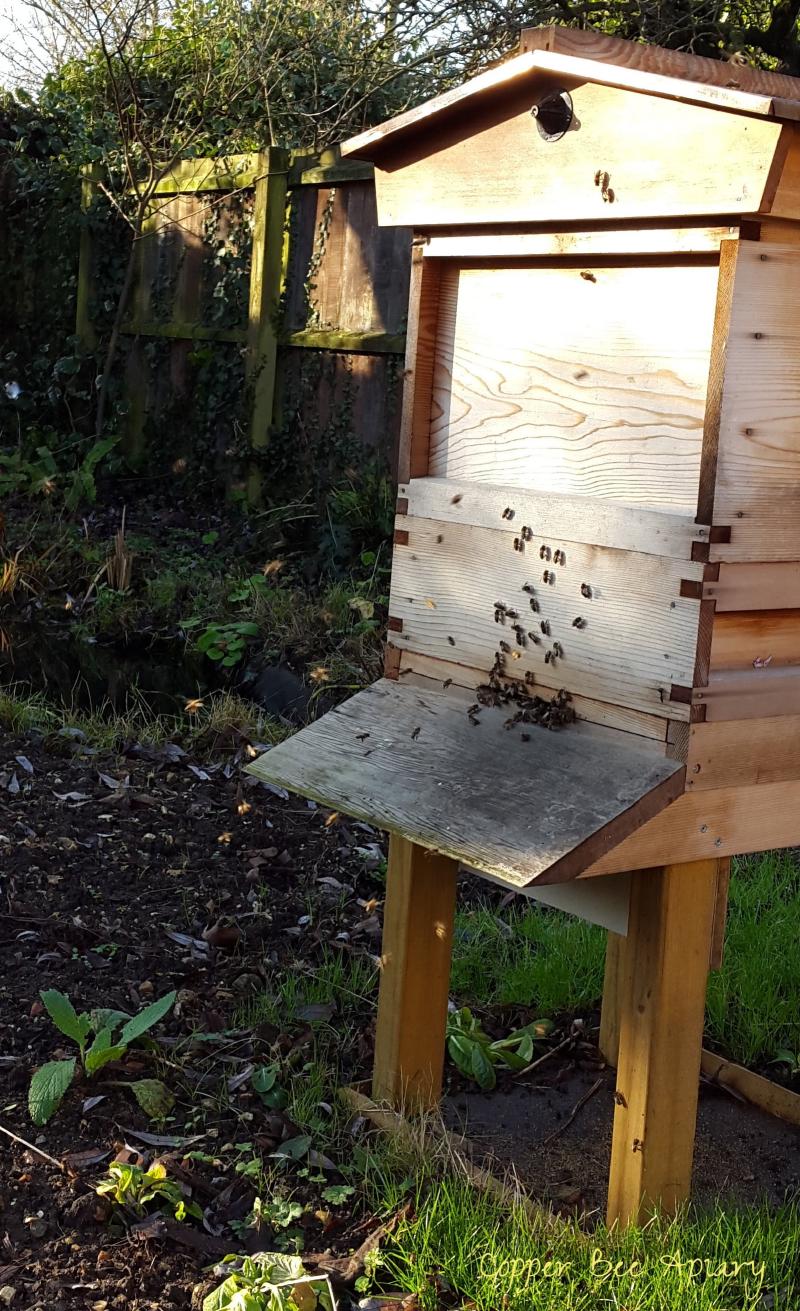
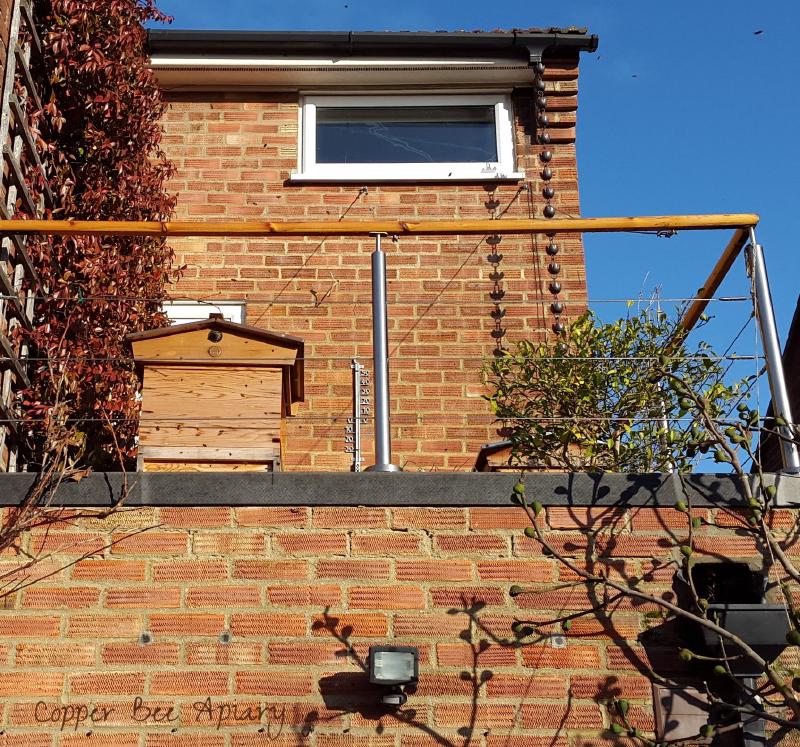
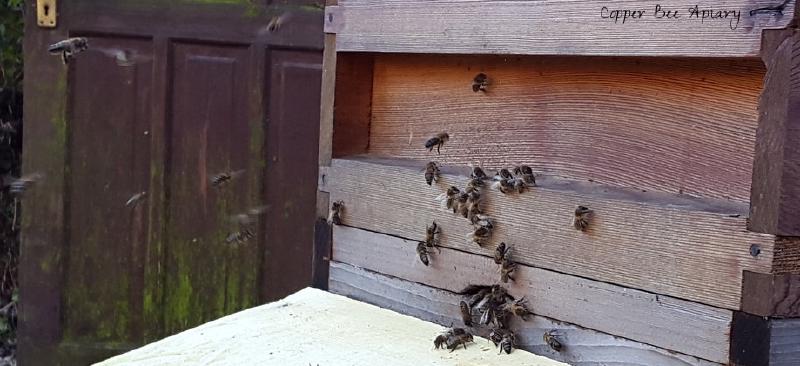
The occasional nice bright day like this is good for letting the bees get out to stretch their wings on cleansing flights. They may even be planning for spring already. Although the spring nectar and pollen are many weeks off yet, perhaps the queens are starting to lay now in order to build up worker numbers in time for the harvest.
Comb Honey
This past summer, the bees in the Copper Hive worked on a new project: sections of comb honey.
Guess what people have got for Christmas!

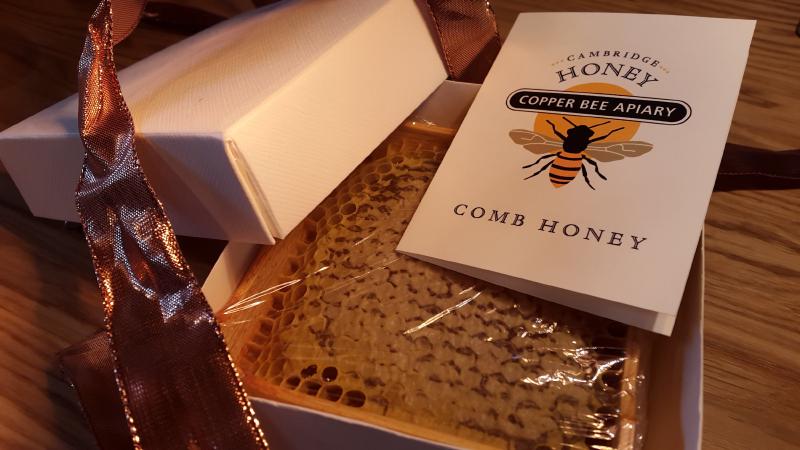
I put the section rack on the hive in June. It has an array of individual boxes for the bees to build honeycomb in. Take off a full section rack and voilà, a set of neatly packaged comb honey sections, each in its own wooden box.
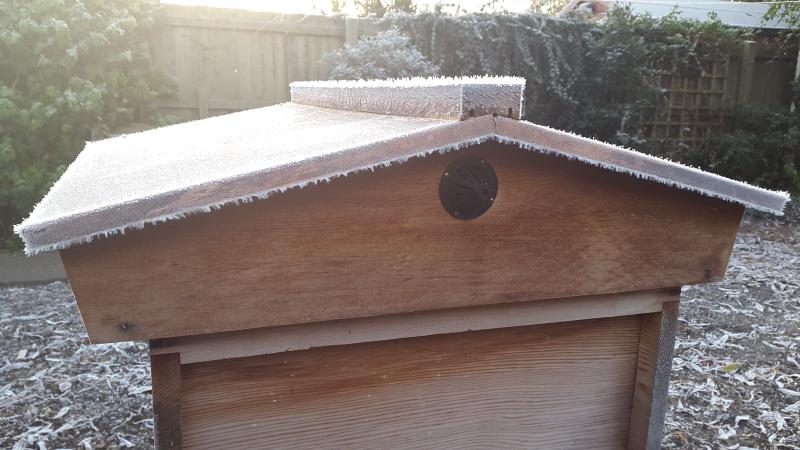
Christmas Eve
Merry Christmas, bees. I hope that you are snug and well-fed in your winter clusters.
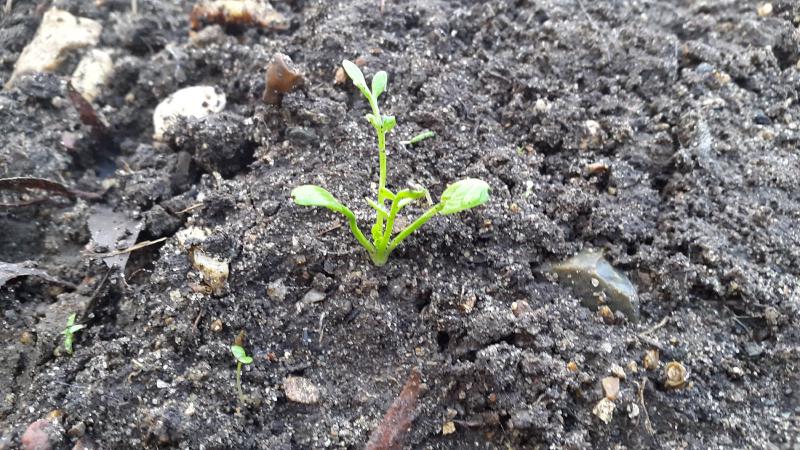
Wildflowers?
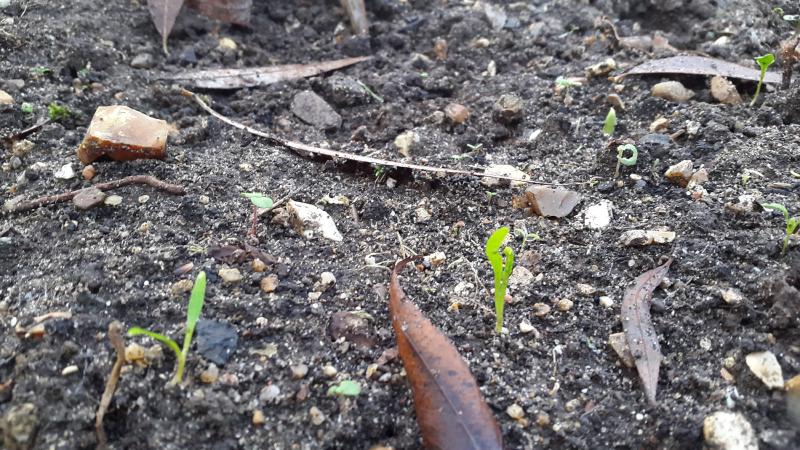
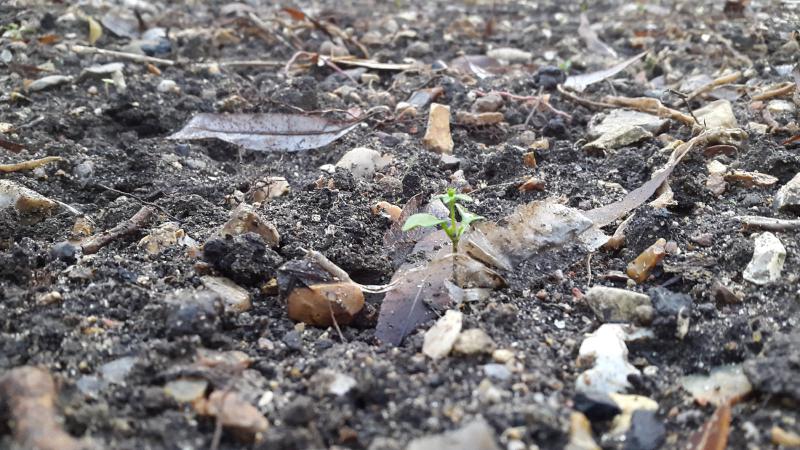
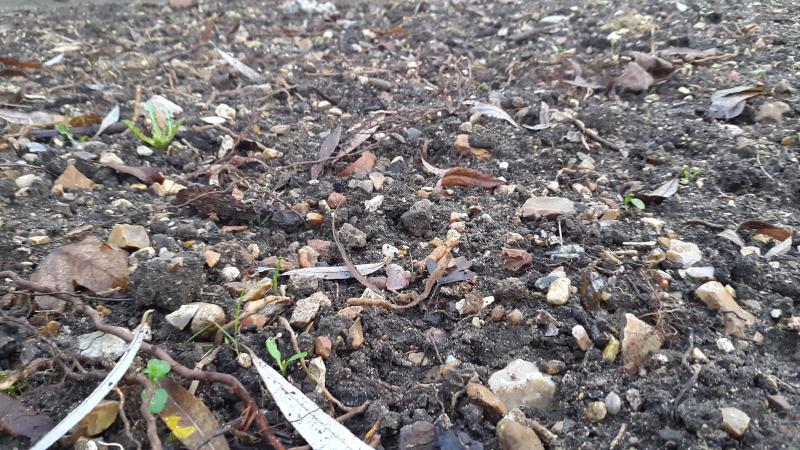
Seeds are germinating in my supposed wildflower meadow. Wildflower seeds maybe! Or weeds…if there’s a difference. Wonder if they will survive the frosts…did they intend to germinate in December or do they think it’s spring?
Thermal Imaging
I wondered whether heat from the bees would be visible, providing a way of checking on affairs in the hive without opening it in winter.Buzzings
I'm learning to recognise the different buzzings of the bees.Drone, Forlorn
This morning was bright and sunny. I went outside to stand in the welcome November sun, and saw a large bee on the landing board of the Copper hive. It was a drone - a male bee - recognisable by his size, his fuzzy roundedness and his big eyes.
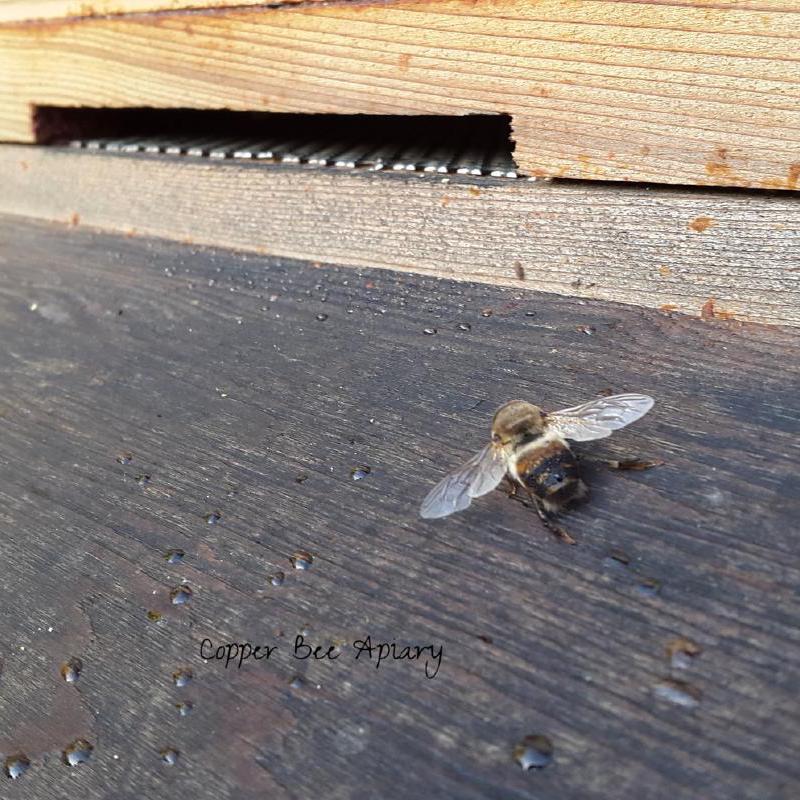
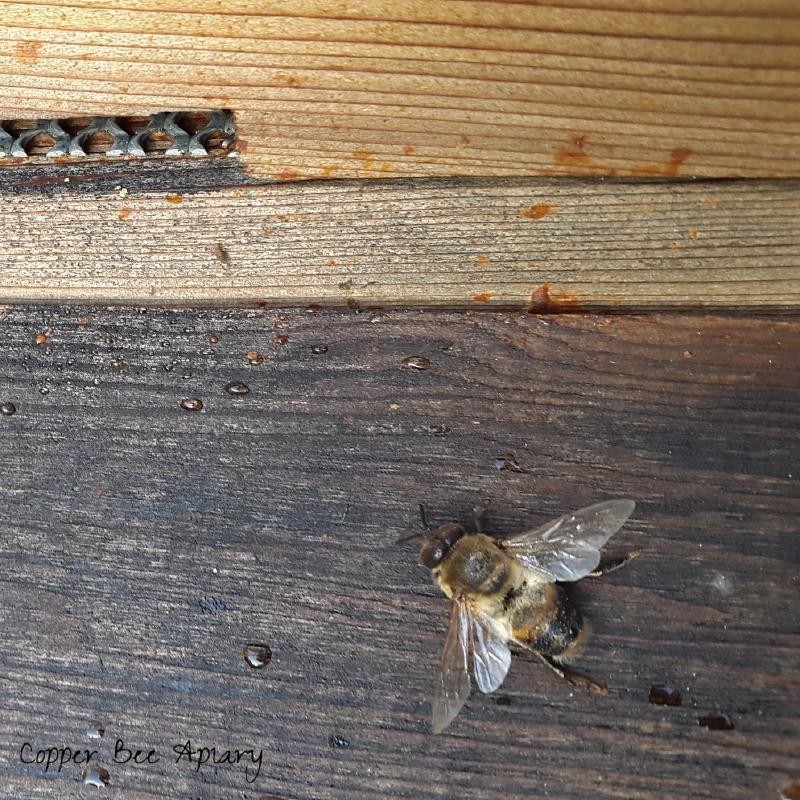
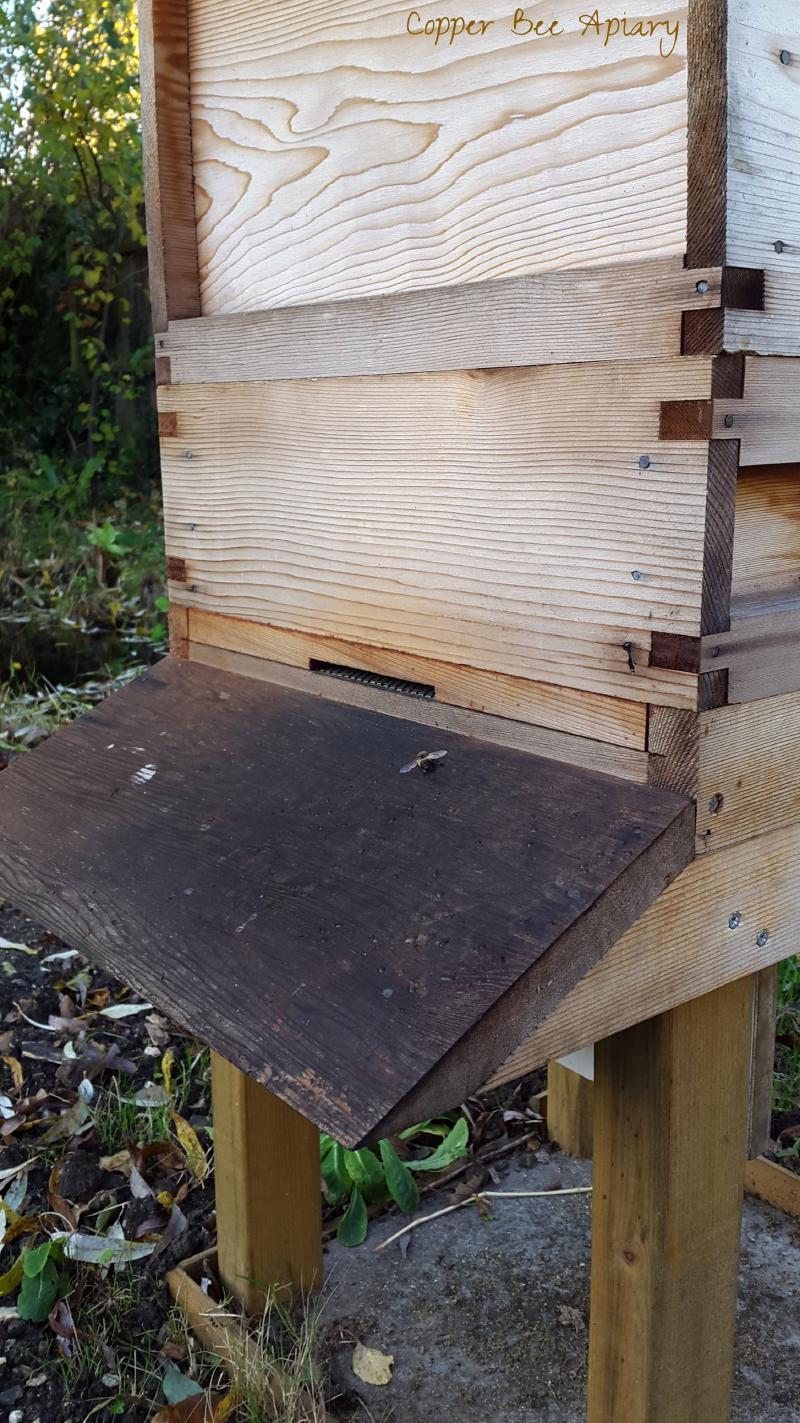
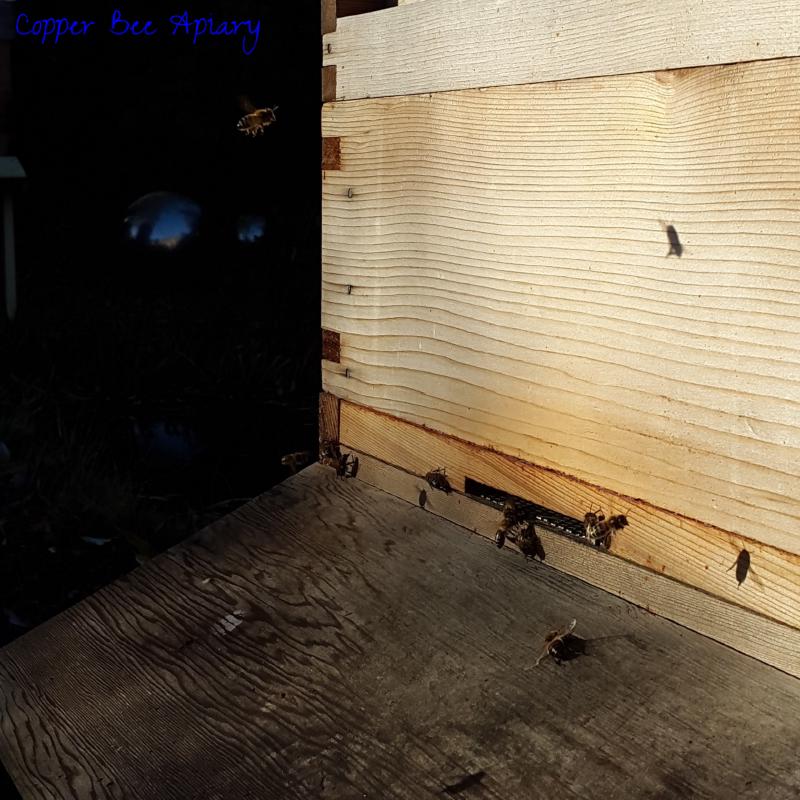
It’s unlikely that he spent a cold, damp night on the landing board out of choice. He is reliant on his sisters - the worker bees who do all the foraging, make all the honey and run the hive - for food and shelter. The drone exists only to mate, but that is a spring/summer activity; there are no virgin queens looking to settle down and start a family at this time of year. So as the colony in autumn undergoes that process that corporate entities euphemistically refer to as “rationalisation and restructuring”, a drone can find himself surplus to requirements. The ground in front of an autumn hive is littered with drones who have received their notices of redundancy, dying from exposure and starvation.
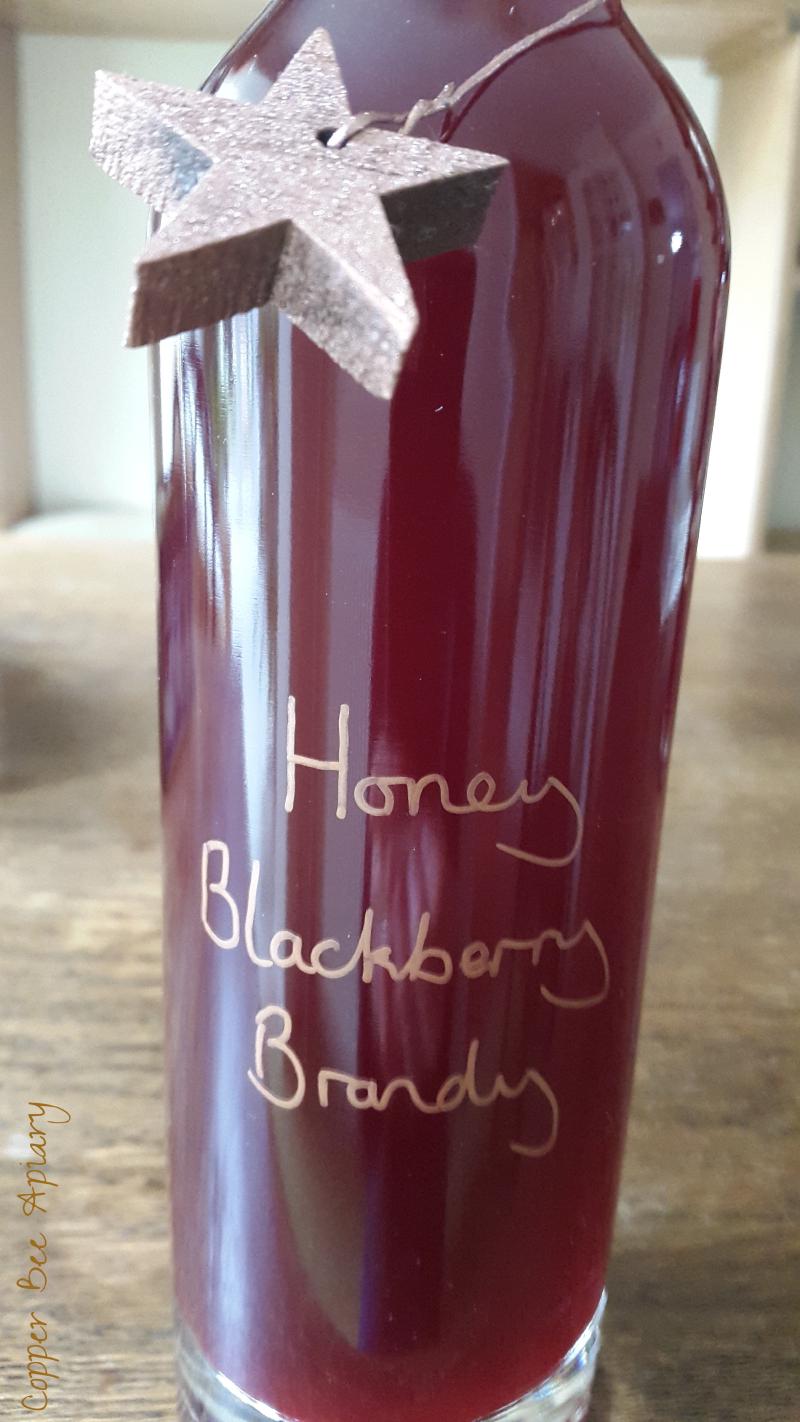
Honey Blackberry Brandy
Ingredients: Brandy, honey, blackberries.
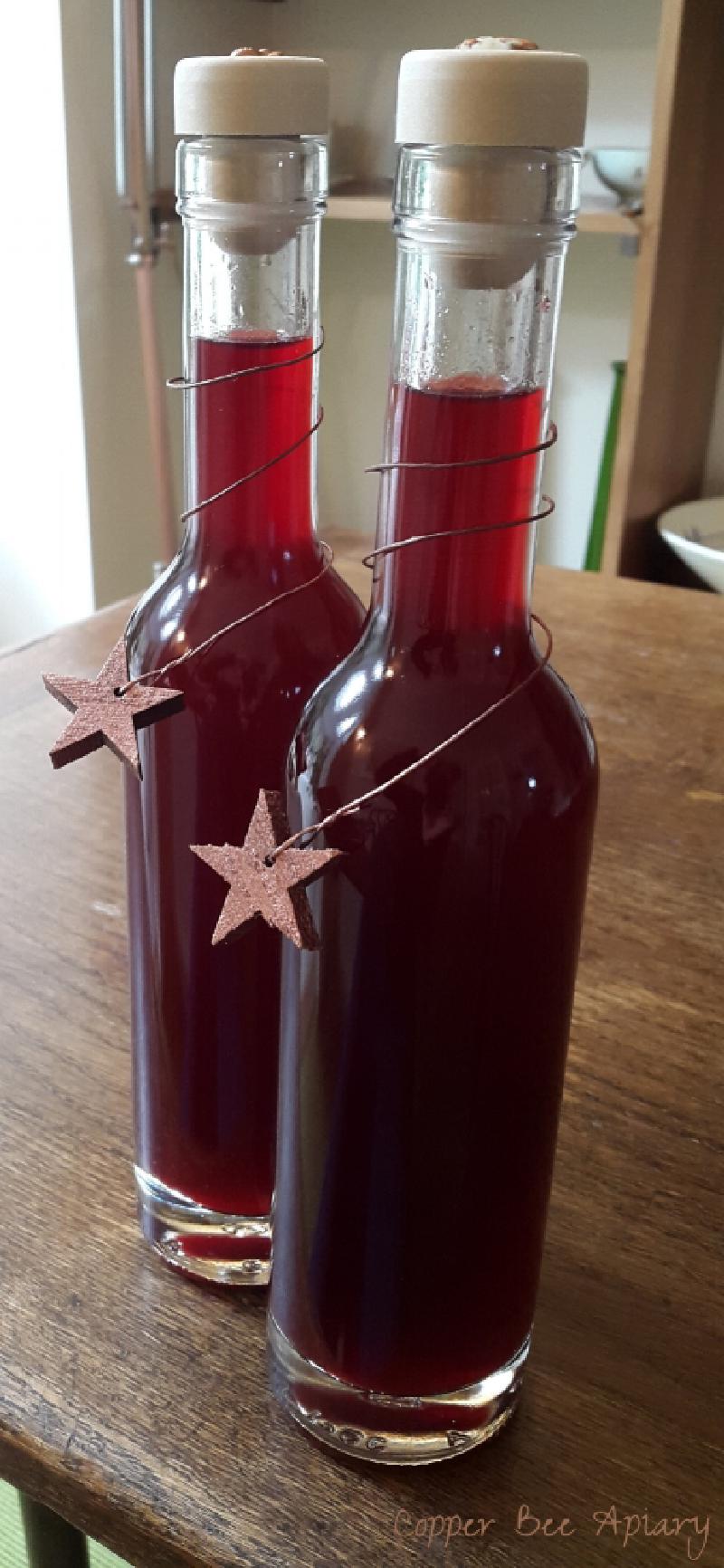
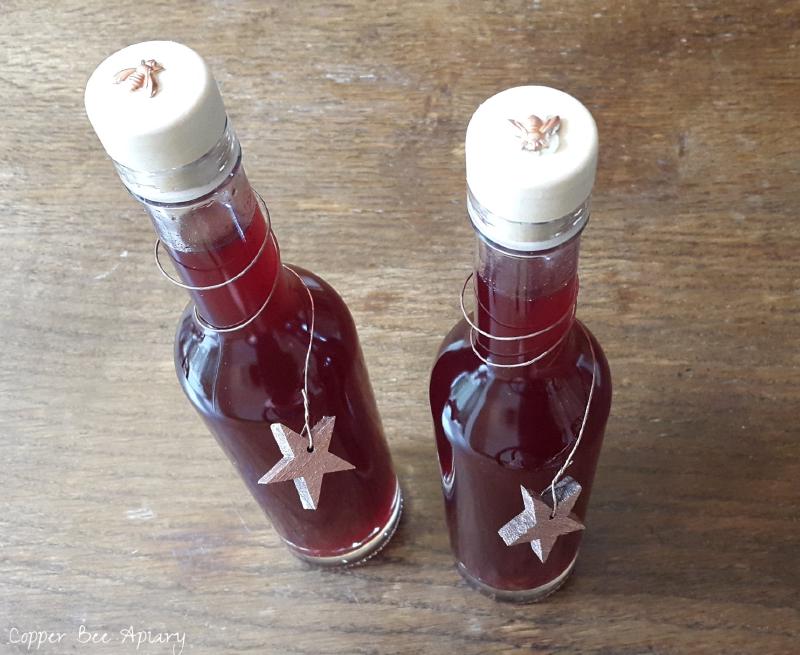
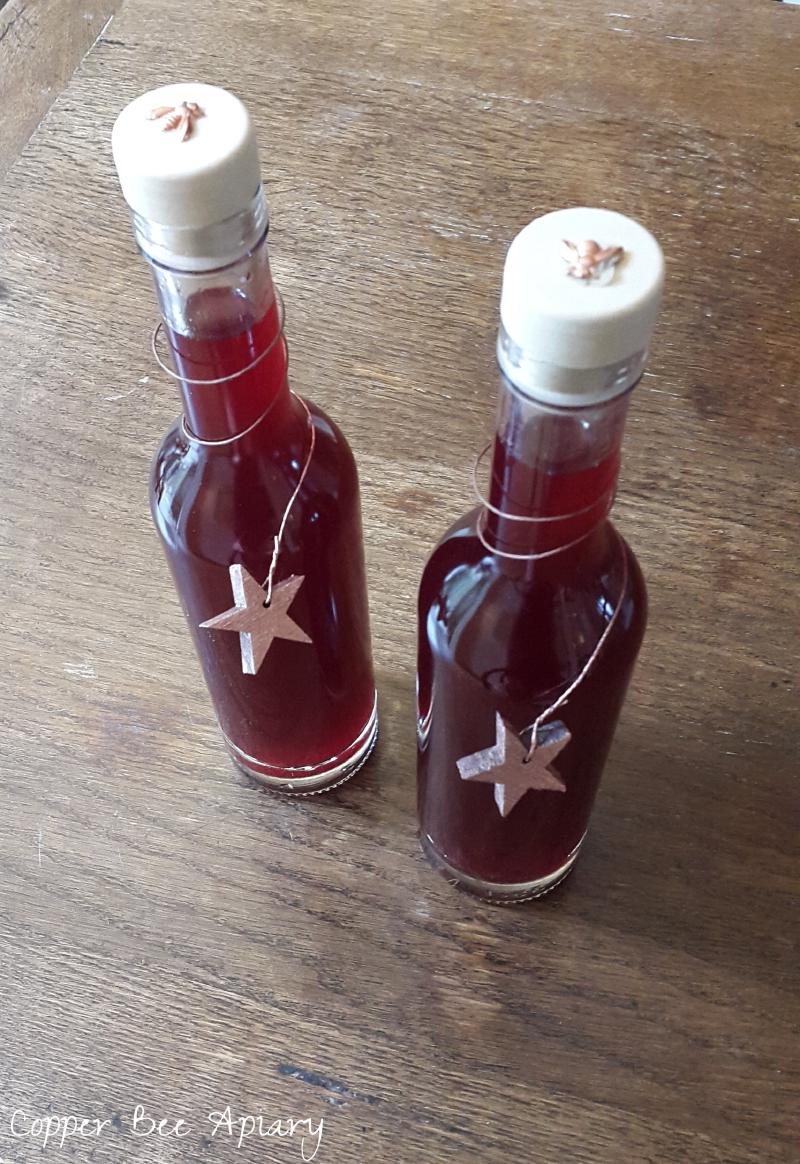
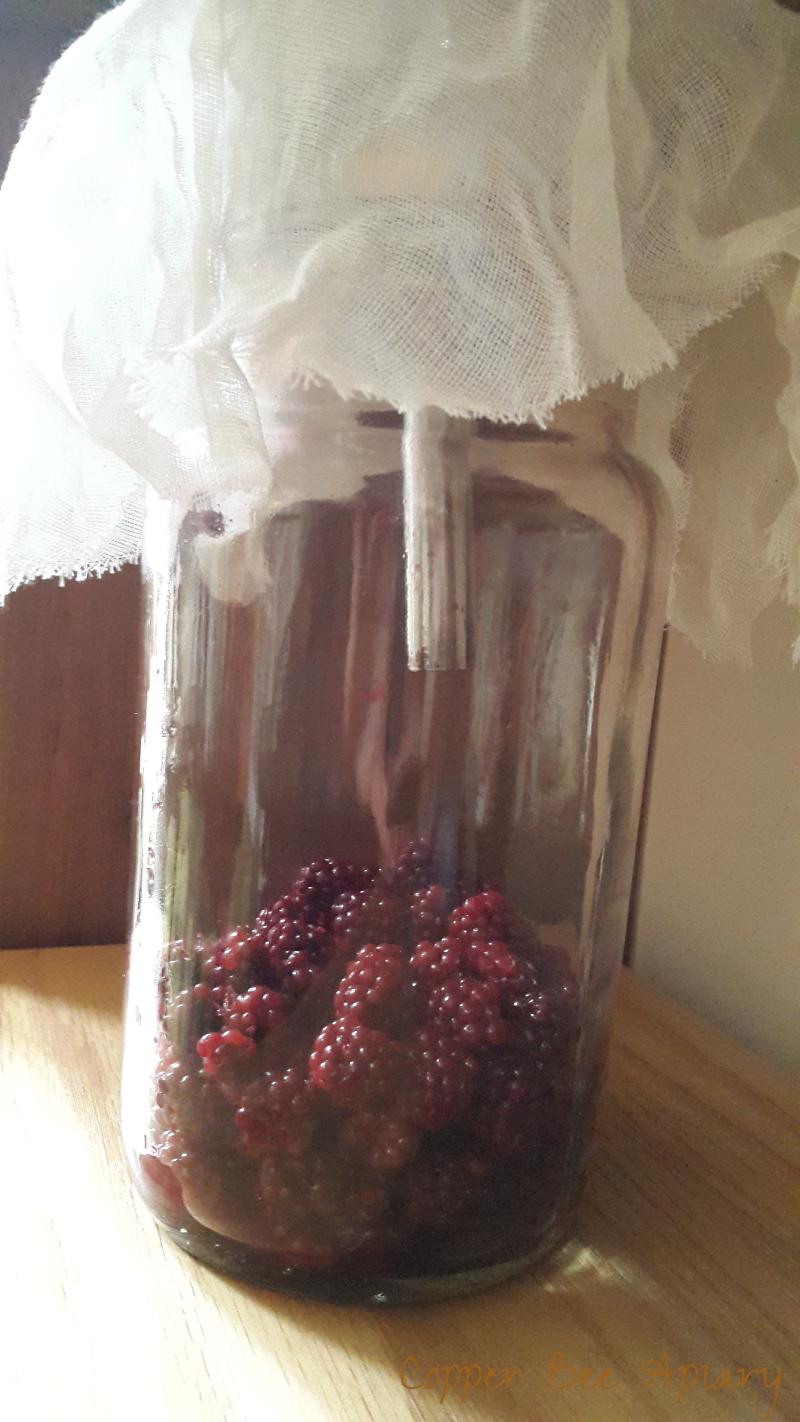
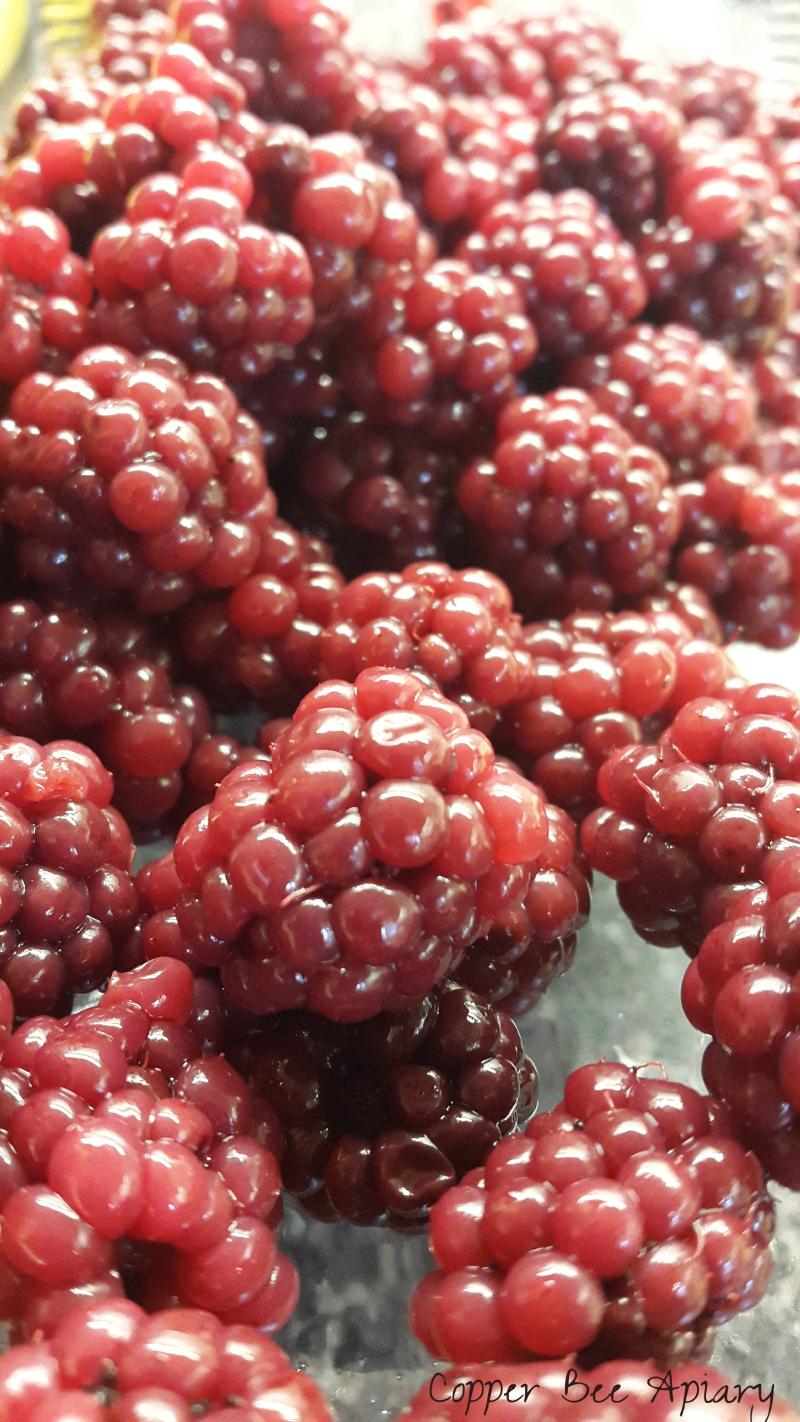
Honey stirred into warm brandy, freshly-picked blackberries steeped in the brandy-honey mixture, then the mixture filtered. A by-product of making the drink is a pile of brandy-soaked fruit, which I think will go very well with vanilla ice-cream.
The Bee Gym
The Bee Gym is a grooming station for honey bees, intended to assist the bees in ridding themselves of the varroa parasite.Pads and Claws

Bees’ feet are more complicated than our own. A lot of engineering goes into them, to allow the bees to walk on different surfaces. Most bees I know can walk up glass, whereas most people I know can’t. Jonathan Pattrick is a local student doing his PhD thesis on how flower petals and bees’ feet interact, and he gave an evening talk to the CBKA on this subject.
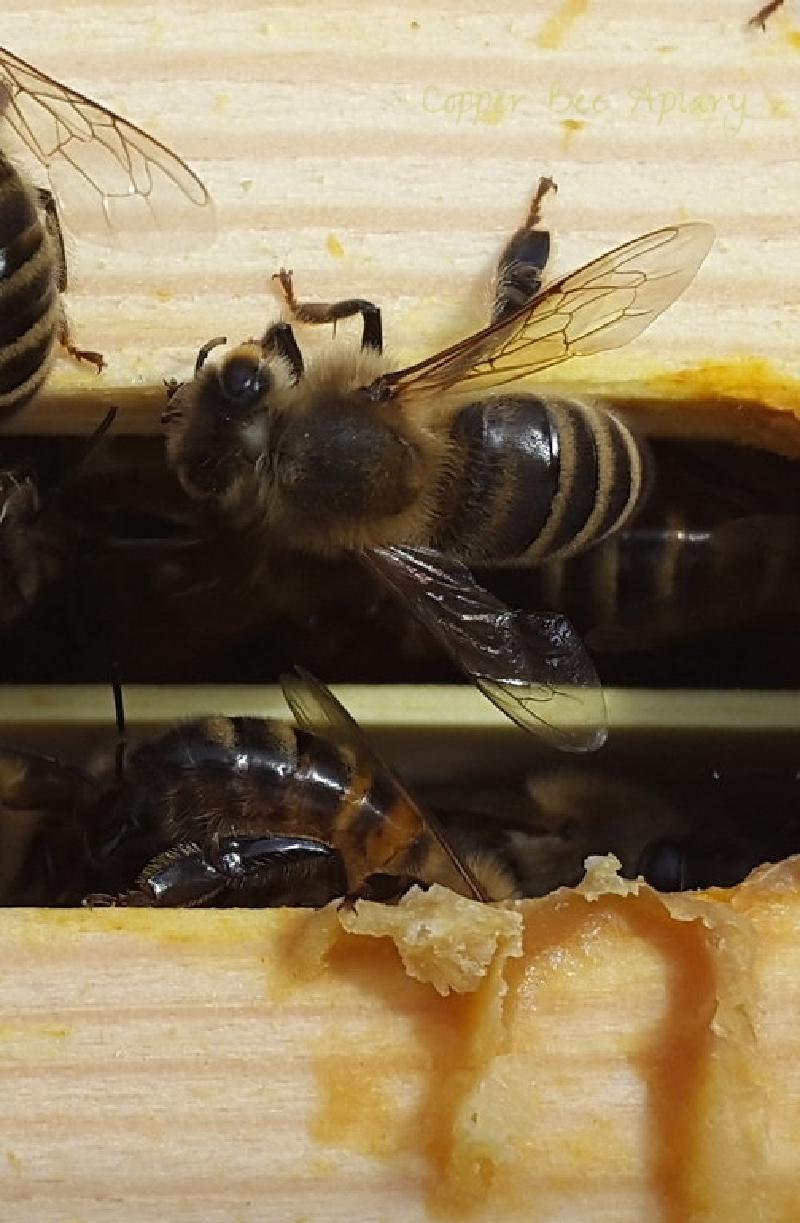
See those tarsal claws, like grappling hooks at the tip of each leg? Those, Jonathan explained, are for walking on rough surfaces. Each foot has two claws, hooking outward. Between the claws is an adhesive pad. This secretes a liquid so that the foot can stick to a smooth surface by surface tension. The foot is unfoldable to expose the pad. So to walk on a rough surface, the bee uses its claws. To walk on a smooth surface, the bee unfolds its feet and uses the sticky pads, placing each pad down and then peeling it off in exactly the right way to detatch it.
Wildflowers
I have redesigned the back garden. Gone are the raised beds, the plants that were in them, and the intervening paths. This is what it looks like now:
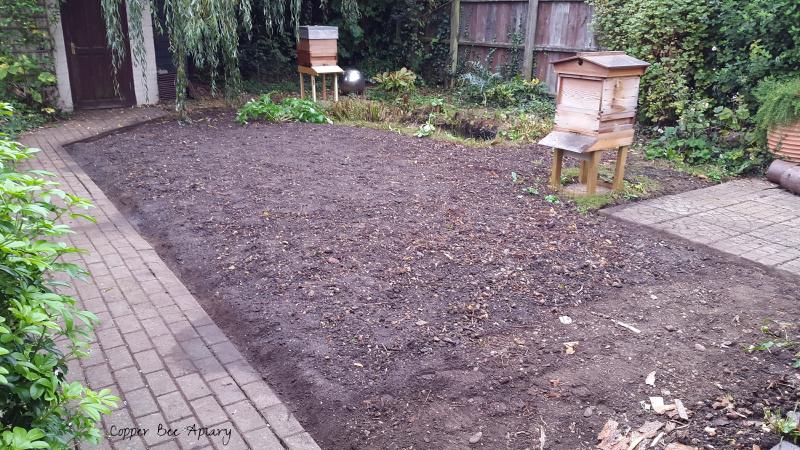
I sowed many packets of wildflower seeds on the cleared ground, and watered them in. Watch this space!
Gentle Bees
A jar of honey is scant compensation for being terrorised while pruning the roses.My Neighbour's Trumpets
In October, the showiest thing in the garden is the orange trumpet plant that climbs over the top of the fence from next door. The bees love it.
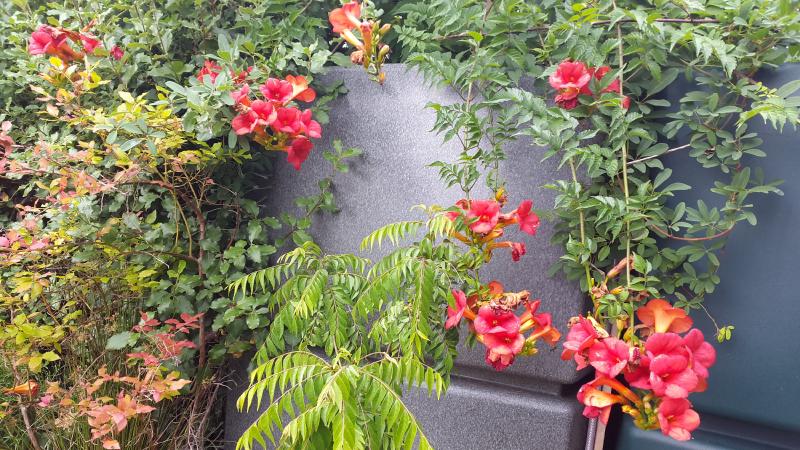
A quick internet search tells me that this is Campsis radicans, the trumpet vine.
The flowers are big and bright, and they seem to be a source of both nectar and pollen. Some bees head right down into the narrow funnel of the trumpet, where there may be nectar. Others are gathering pollen from the yellow anthers further up.
Imirie Shims
Upper entrances for beehives!Labels & Branding
Practical advice for most amateur beekeepers is:
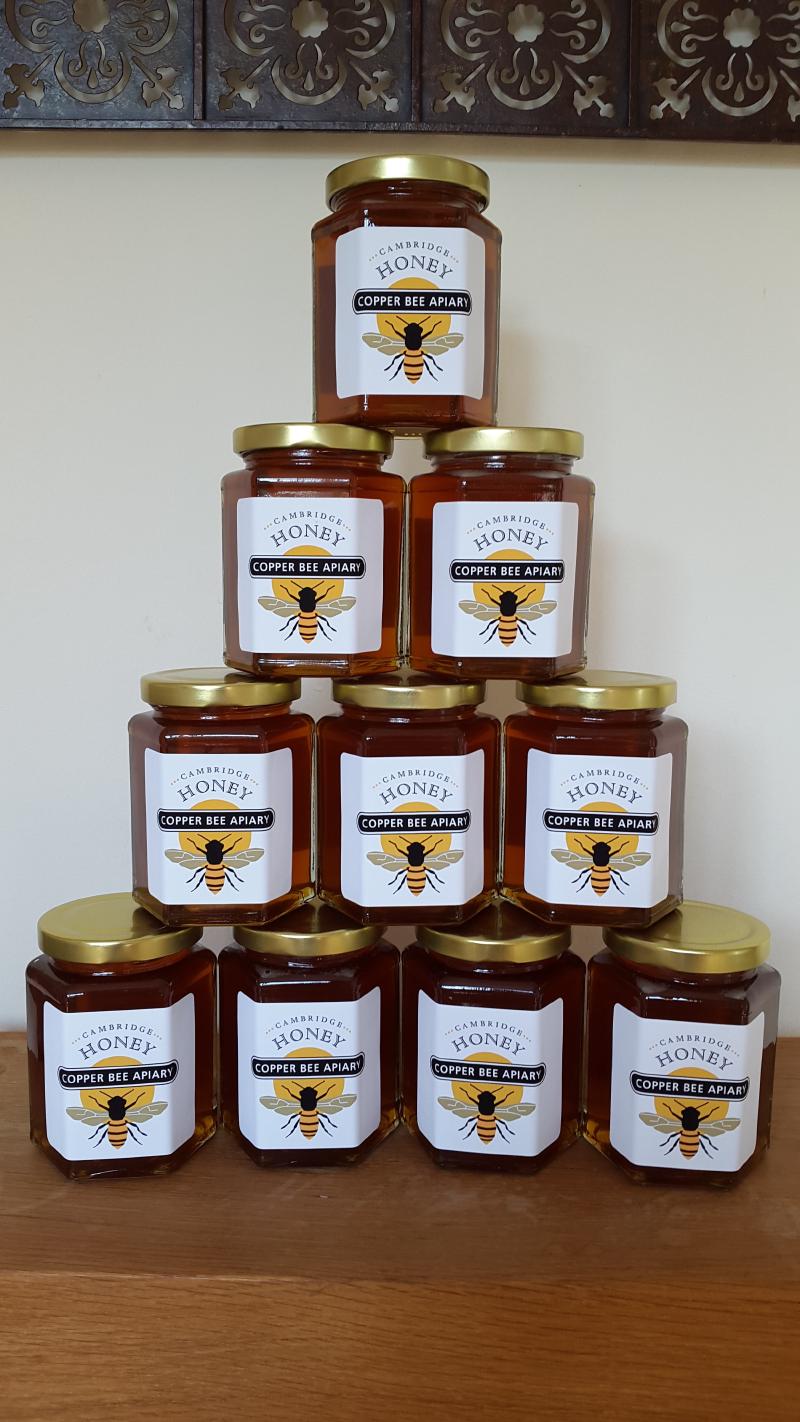
Don’t design your own honey labels - get them from Thorne’s.
And that’s what Hamish Symington told us on the CBKA Improvers’ course. He’s a graphic designer, so he actually had designed his own labels. But designing and printing labels is a process that most of us are neither good at nor geared up for. However, after trawling through all the label designs that Thorne’s website had to offer and many more besides, I found I just didn’t really like any of them.
The Bee Inspector
Do not imagine that all beekeepers are "saving the bees" - in some cases they are doing quite the opposite.Tincture of Propolis
Following my earlier experiments, there it is, bottled.
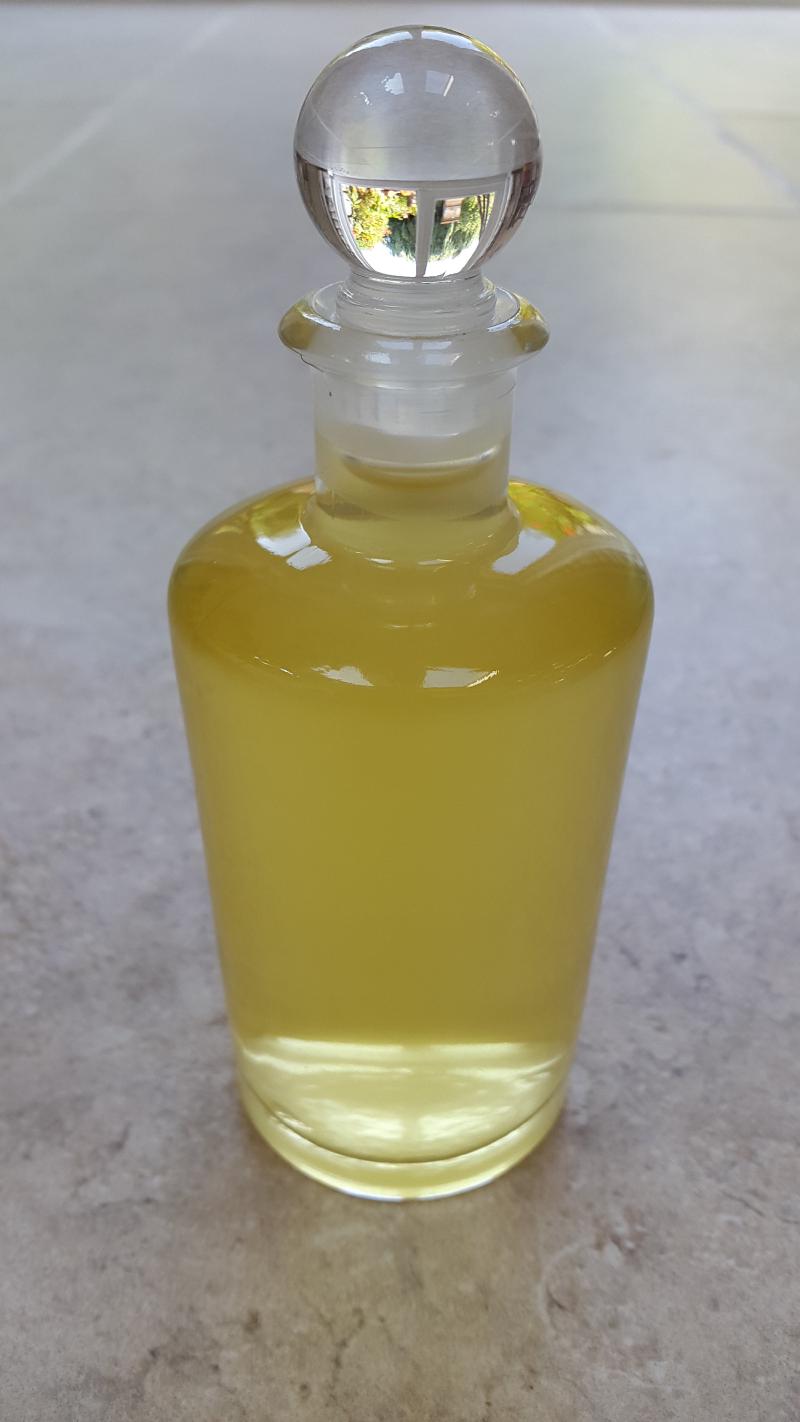
It developed a bitterness, and tastes appropriately medicinal.
I had thought that the jug I used to make it would follow the one-way path that various other items have taken from kitchen to beekeeping kit, but it cleaned up well.
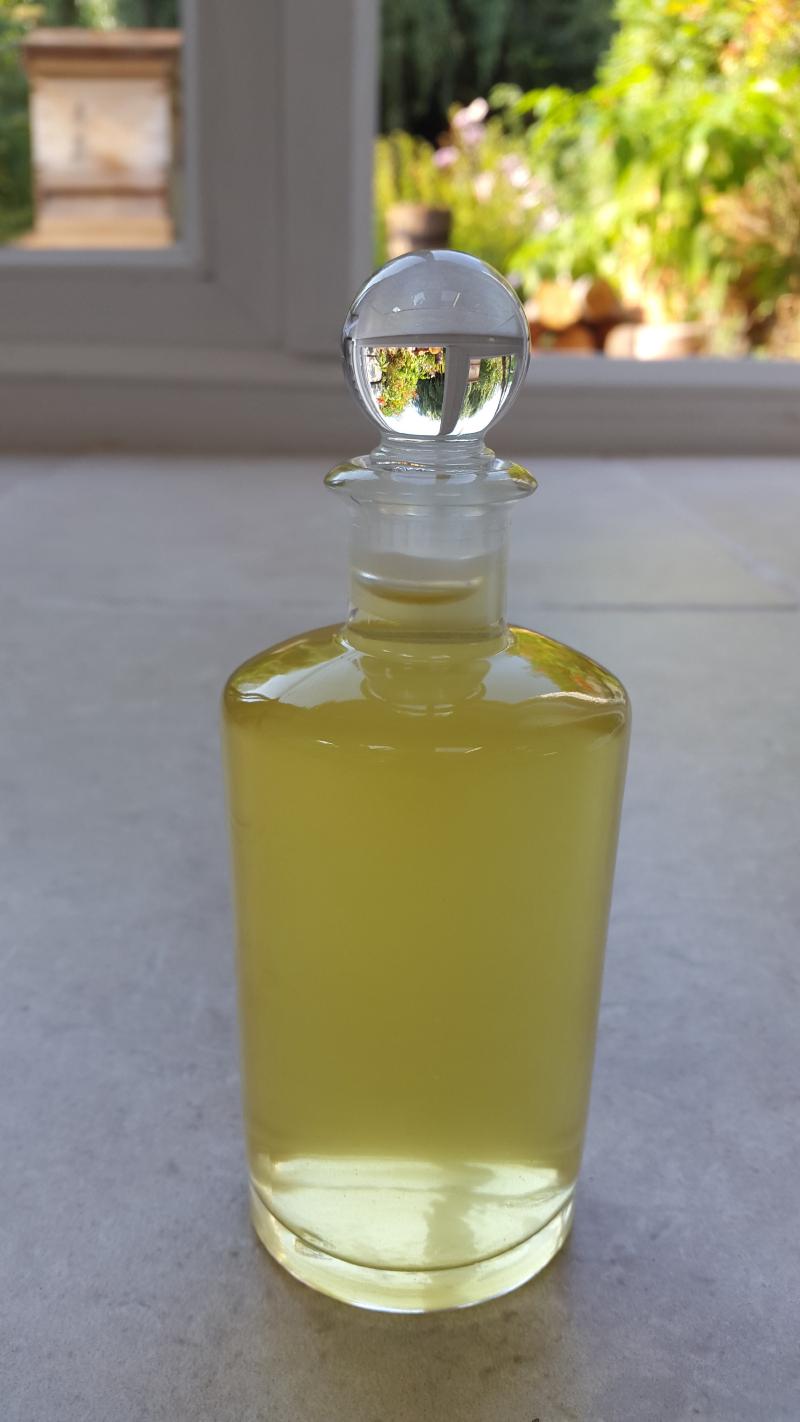
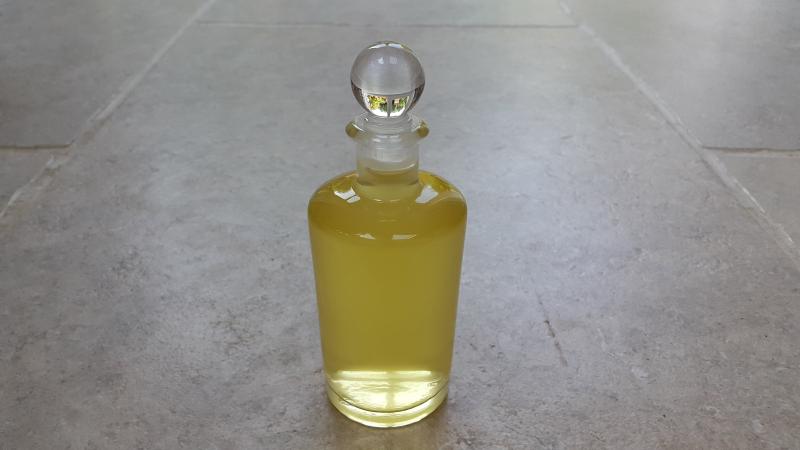
P.S. The keen-eyed will have noticed a beehive in each photograph of the tincture.
The Perfumer's Nose
I sent a jar each of both this year's honeys to my Dad, perfumer Dr John King, and invited his opinions.Propolis
Propolis is the reddish brown sticky resin that bees stick things together with, bung up gaps with, and strengthen wax with. Apparently they collect it from trees. I have seen propolis foragers in the hive - on their rear legs where the pollen basket is they have a dollop of propolis like a bead of glue.
One of the wonderful things about propolis is its scent. It is ylang ylang, vanilla, a pine forest on a hot day, and a glass of mulled wine. And it emits a toasted version of these scents when burnt with a blowtorch, which enlivens the task of sterilising a second hand hive or flame-cleaning a queen excluder.
Queen Felicity
I hope I never become blasé about seeing QueensThe Apiary in August
As pictured here, you can see that the garden is a mess, but we enjoy a nice Sunday breakfast watching the bees.
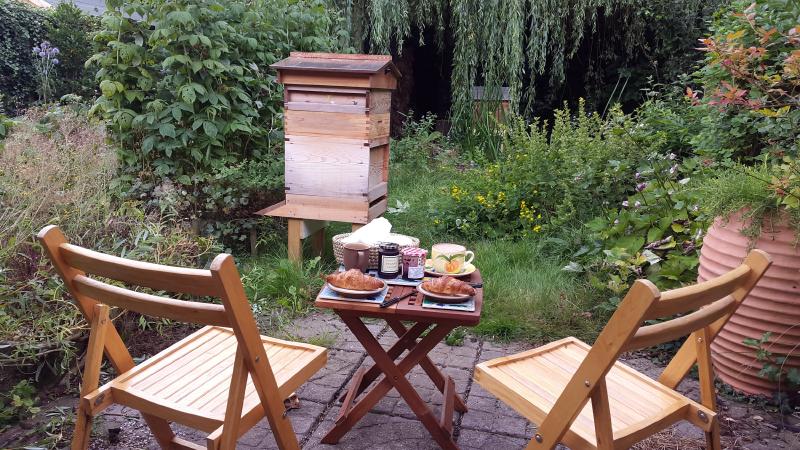
It is late Summer and the availability of forage in the garden (for the bees at least) is reducing, but there are still some flowers around. The bees’ favourite thing is the Echinops:
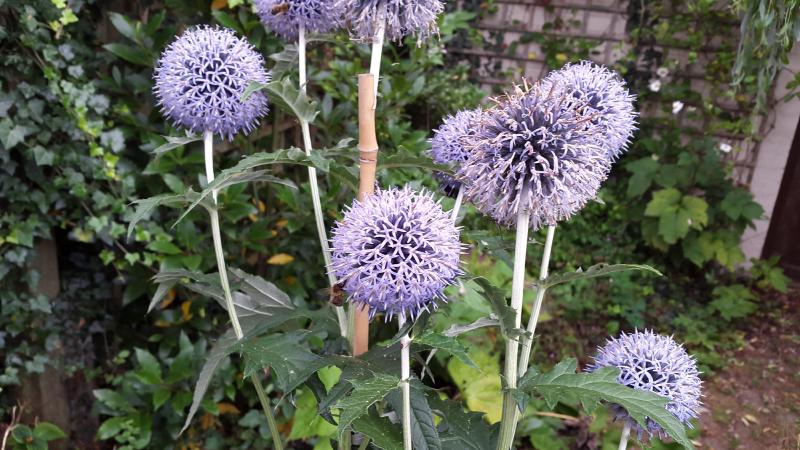
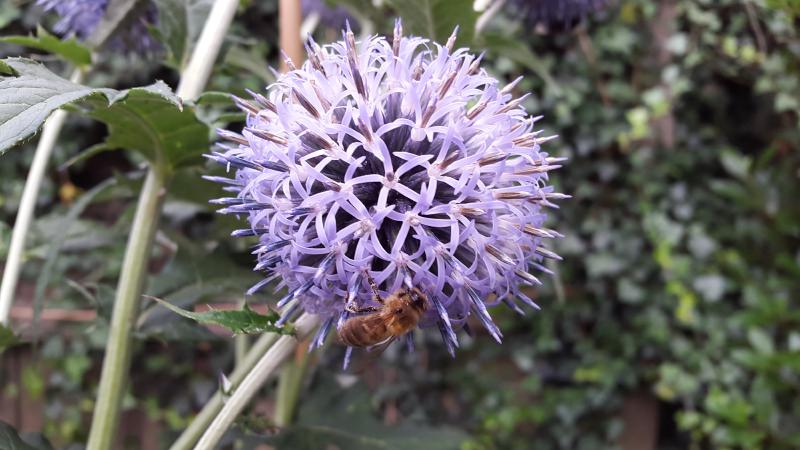
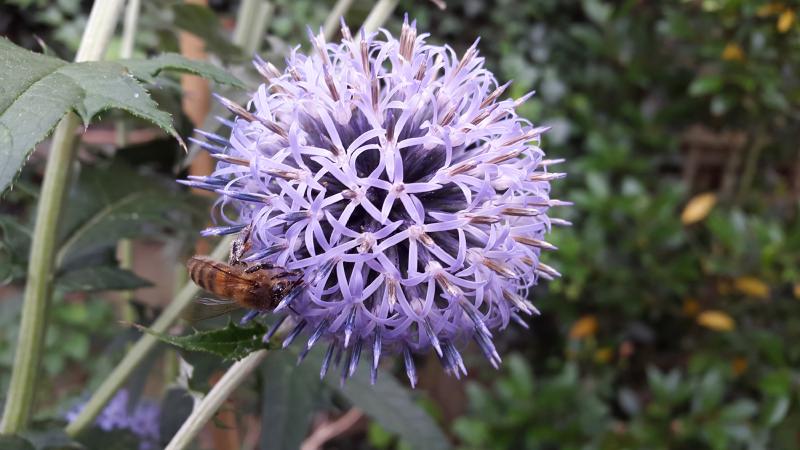
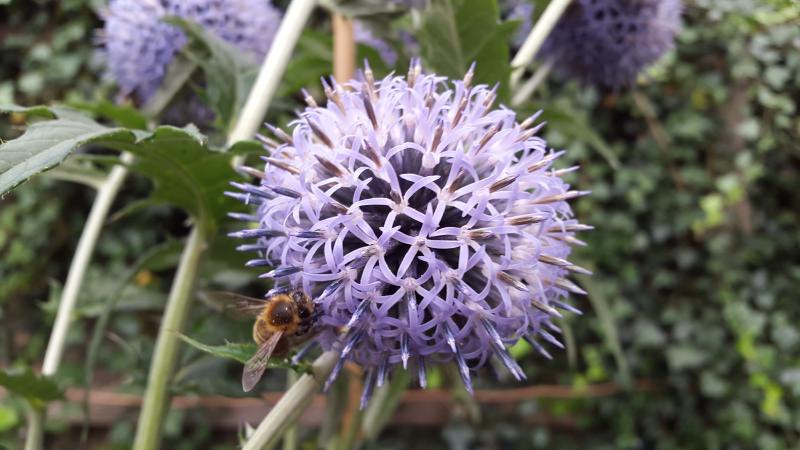
And they continue to forage on the remaining raspberry flowers, but most of those are now turning to fruit:
More Smith Honey
The Smith Bees Move House
There are a lot of confused bees flying around the gin terrace looking for their hive, which isn’t where they left it.
The Smith beehive has served us well, but it has a design flaw - there is too much surface contact between some of the parts, which increases the risk of crushing bees between moving parts and prompts the bees to apply large amounts of propolis to seal the surfaces together. I’m taking the Smith Hive out of service, and will keep it in reserve as a spare.
Queenlessness Revisited
Regular readers (hello Mums!) will be keen to know the status of the Disc Hive, following the untimely loss of Queen Gretchen.
So here’s the news: WE HAVE A QUEEN!
A quick look at the central brood frame told me all I needed to know. There was already a large patch of sealed worker brood on each side of the frame, and unsealed brood too. Hooray! The bees have made things right all by themselves, without (or perhaps despite) me.
Smith Honey
The Smith bees have produced a magnificent crop of honey.Our buzzing house
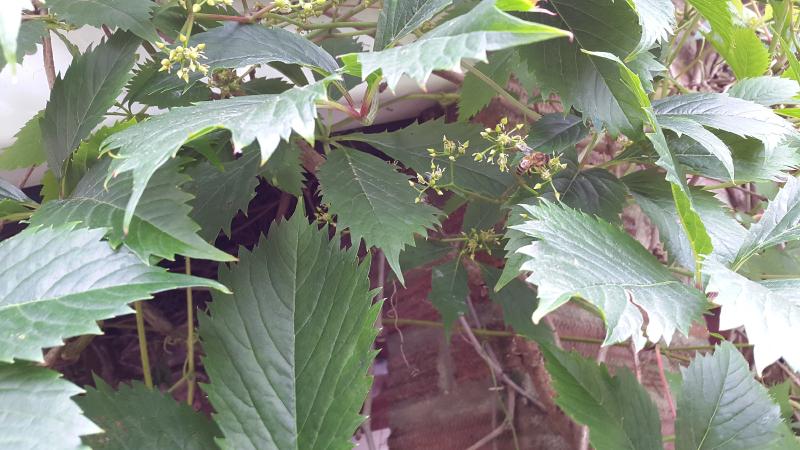
The Virginia creeper growing on the front of the house is dense with honeybees. The flowers are small, and it’s only because the plant buzzes so loudly with bees that I notice it flowering at all. I wonder whether visitors notice the humming of bees around the front door.
July forage
July is a good time of year for foraging honeybees. Stourbridge Common and Ditton Meadows are within 200 m of the apiary, and the bees are busy there. Here’s what we found them foraging on:
Thistles
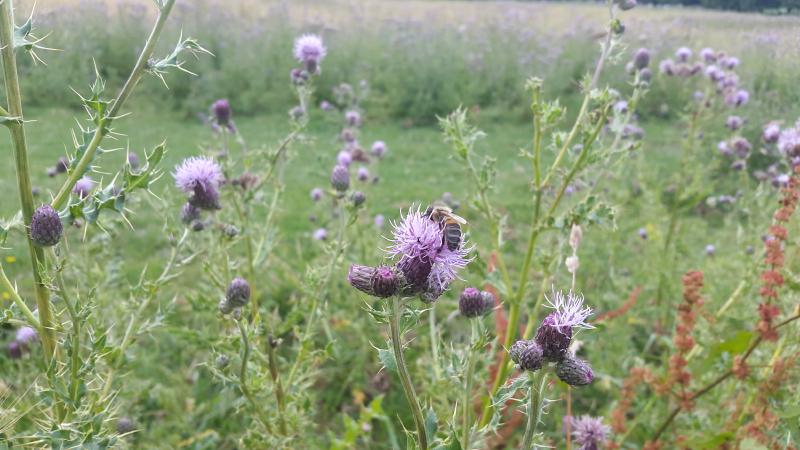
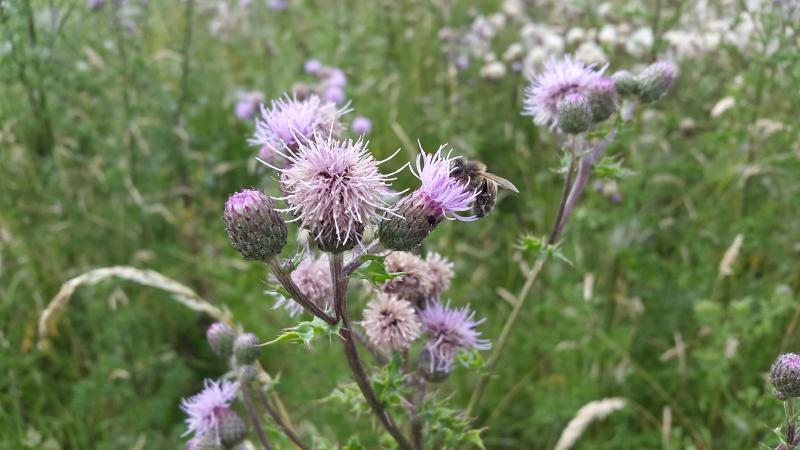
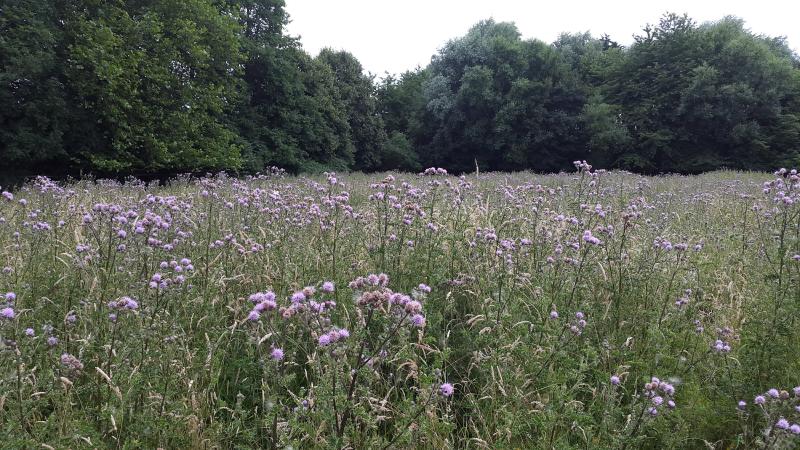
Thistles are a source of abundant nectar, if the scent of honey in the air around them is anything to go by.
Bramble
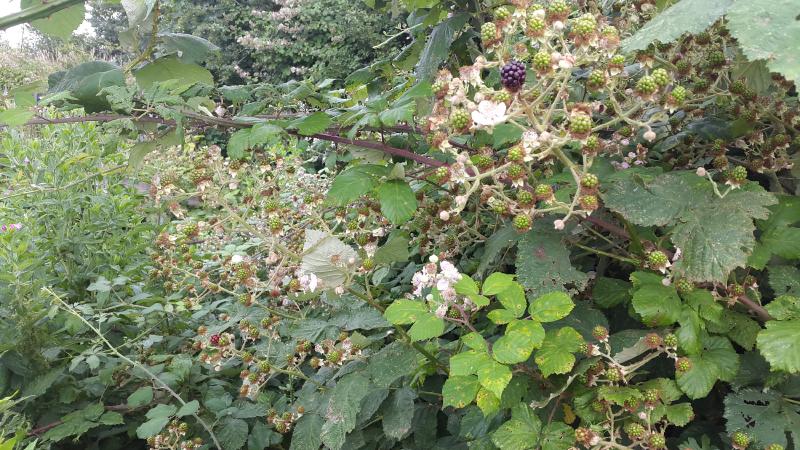
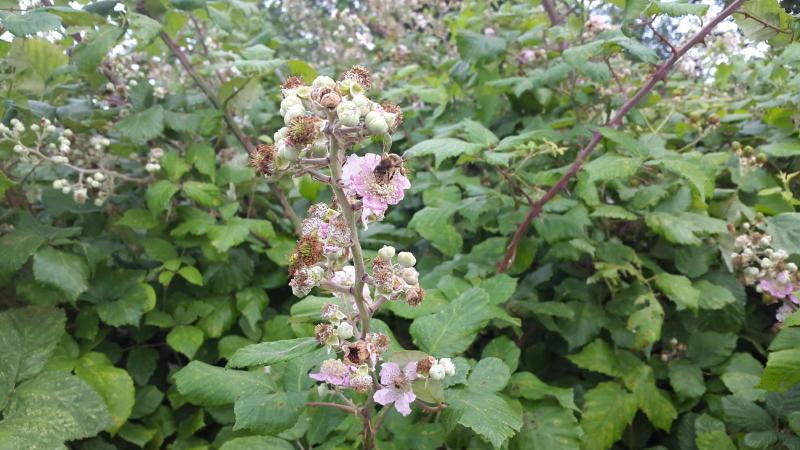
It seems early this year - July blackberries! In the second picture (click on the image to expand it), you can see a full pollen basket on the worker’s leg.
Queenlessness
Alas. We have lost Queen Gretchen.Copper Bee Apiary
Our house has a leaking roof. I bought the house over 10 years ago, and noticed the leak in the roof soon after. It still leaks today. Rain comes in. Every so often we attempt a repair. Then from time to time we get professional roofers in. No success yet.
Anyway, one day in early June 2015 I was sat thinking about how nice it would be to have a new roof. Perhaps we could redesign it. Perhaps we could have a vaulted glass roof, to let in light so that I could grow a grove of lemon trees in the sitting room. Or perhaps we could have a flat roof and I could put beehives on it. Or a green roof. Or…a copper roof. I very much like copper rooves. I like the metal copper. On the gin terrace, where the apiary began with the first hive - Cedar Hive - being set up, there is a copper rain chain hanging from the gutter to channel rain into a copper oxide glazed bowl beneath.
BIBBA-SICAMM Conference, Llangollen
September 2014
My first beekeeping conference! Trisha Marlow of Camlad Apiaries asked me to do a write-up for Beecraft magazine. Here’s what I wrote:
The BIBBA/SICAMM conference, Llangollen, Wales, 26-28 September 2014
Hilary van der Hoff (Cambridge, UK)
Being new to beekeeping, I’d only met a couple of other beekeepers before I attended the BIBBA/SICAMM conference. And I didn’t know much beekeeping theory or practice either, only what I’d picked up from my friend who introduced me to beekeeping earlier this year, and from various publications I’d got hold of. So, I thought 3 days’ intensive education in beekeeping would be just what I needed.
Wax building
September 2014
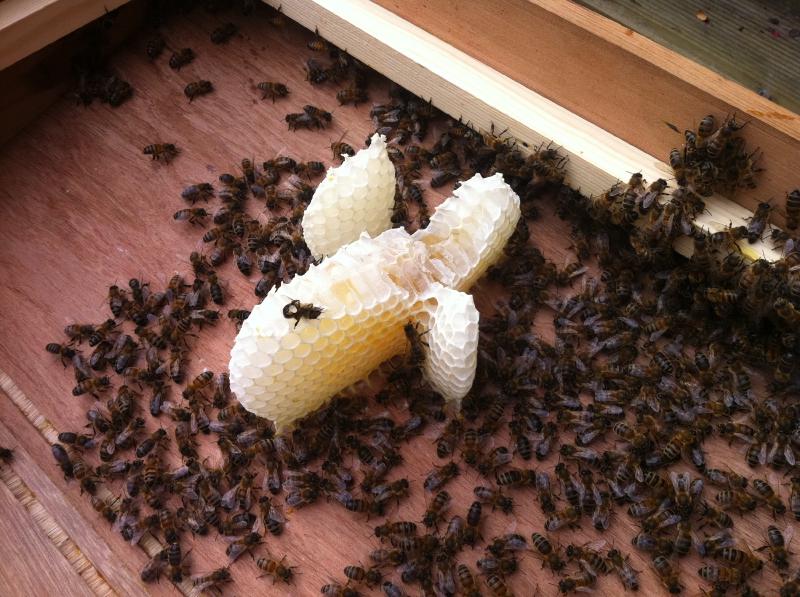
I treated the colony with Apiguard, to kill varroa. This involves placing an eke (spacer) above the brood box to make room for the tray of Apiguard, then I put the crown board and roof on top. When it was time to remove these, I found the bees had filled the eke and some of the roof space with honeycomb.
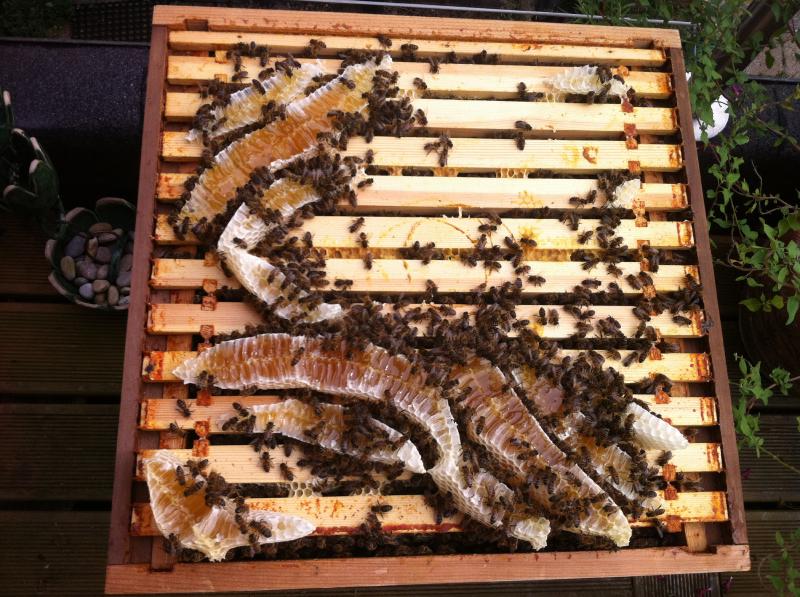
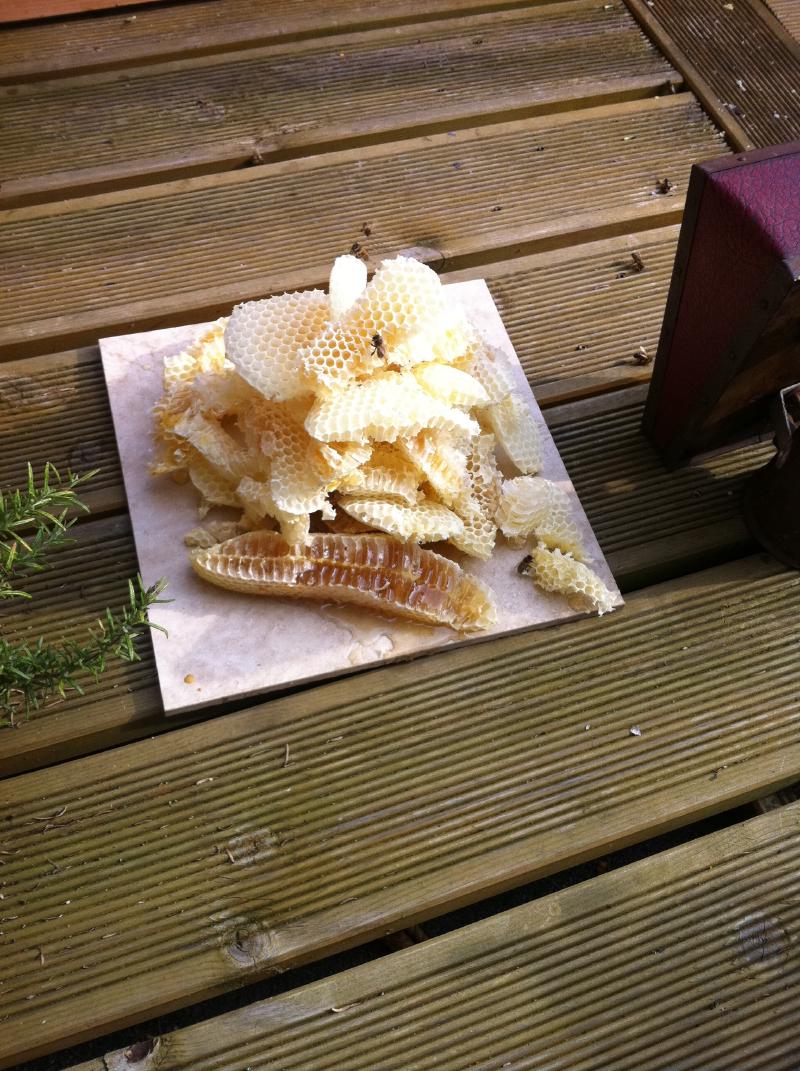
So I had a first go at melting and filtering beeswax.